
When buyers compare aerogel coating, the biggest source of rework is often not the nominal thermal claim but the interface: substrate cleanliness, application thickness, cure conditions, and traceability. A silica aerogel coating should therefore be qualified as an applied system on the target metal, not judged only from a container label or a laboratory value.
How does aerogel coating reduce surface-protection risk?
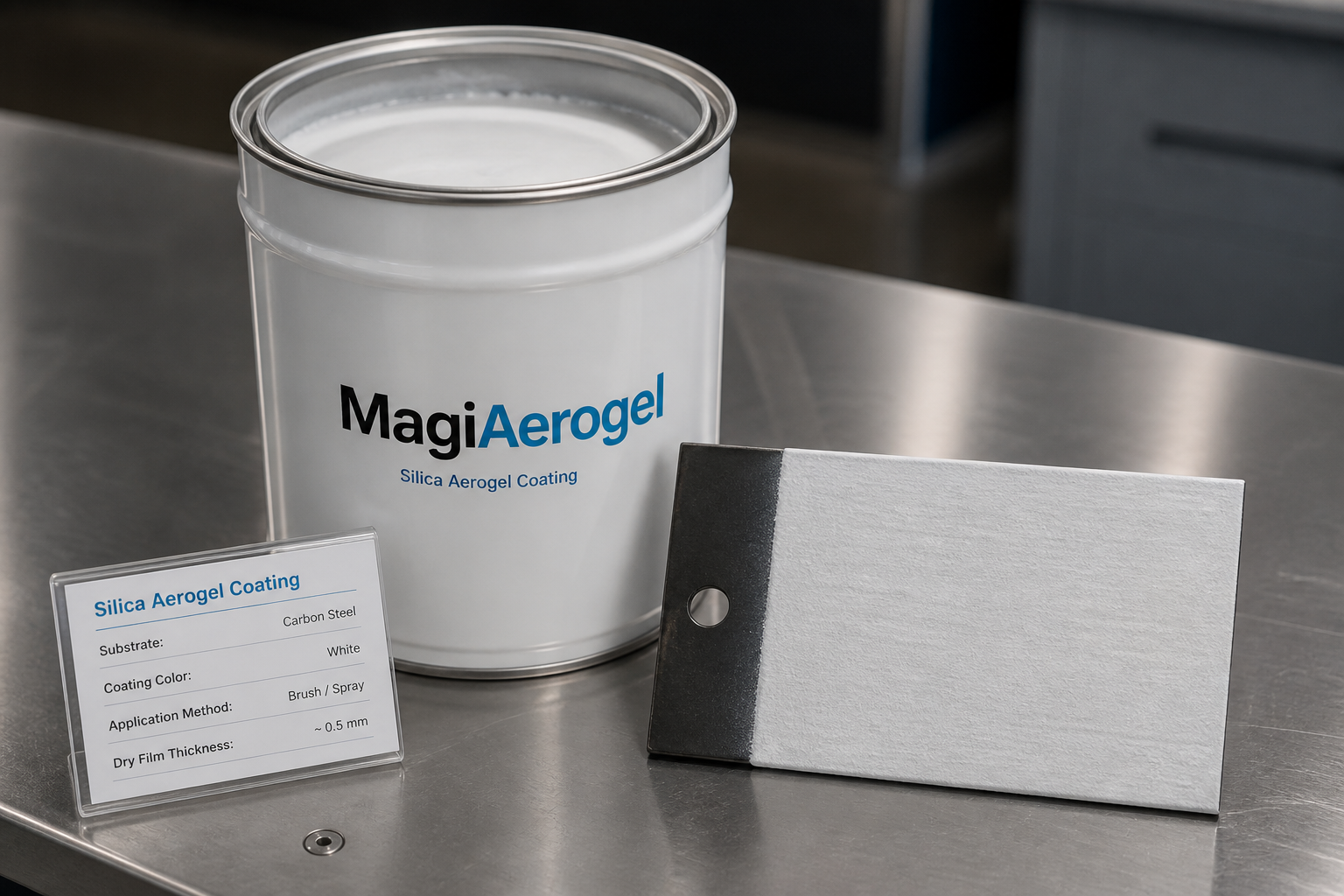
Silica aerogel coating creates a thin insulating layer on a prepared substrate, helping buyers address thermal-loss or hot-surface constraints where conventional insulation formats are difficult to fit. The result depends on the substrate, application method, dry-film thickness, cure, and service environment.
Start by comparing the MagiAerogel silica aerogel thermal barrier coating with the target surface and operating envelope. Record substrate type, preparation method, target thickness, application equipment, cure window, packaging, and batch number before approving a sample.
What surface preparation should buyers specify for an aerogel coating?
Use a short work instruction that the applicator can repeat:
- Remove contamination: degrease the metal and remove oil, dust, salts, loose rust, and old flaking material.
- Control the profile: define the accepted roughness or preparation grade for the chosen substrate rather than leaving it to visual judgment.
- Check the environment: record surface temperature, air temperature, humidity, and condensation margin before each application window.
- Mask interfaces: protect flanges, inspection points, threads, and identification marks so the coating does not change fit or service access.
- Keep traceability: link the applicator, batch, substrate area, thickness readings, and cure record.
For an equipment-focused comparison, review the MagiAerogel silica aerogel coating for industrial equipment against the surface-preparation and access requirements in your work instruction.

Which application checks matter for aerogel paint and coating spray?
Measure the wet or dry film as required by the product specification, and do not rely on a single reading. A practical qualification screen can use at least 5 readings per coupon, with 0.5 to 2.0 mm as an initial thickness range only when it matches the selected grade and design need. Record thin spots, runs, pinholes, edge pullback, and visible contamination.
If the project uses spray equipment, verify nozzle, pressure, mix ratio, pot life, and pass sequence before production. If it uses brush or roller application, define the allowable overlap and recoat interval. The MagiAerogel aerogel insulation coating for metal surfaces can be used as a product-line reference while the buyer confirms the actual technical data sheet and application method.
How should buyers control cure, inspection, and recoat drift?
Set an agreed cure window before final acceptance. A 24 to 72 hour initial window may be suitable for a controlled ambient screen, but lower temperature, high humidity, film build, or restricted airflow can extend it. Inspect appearance, dry-film thickness, adhesion, and any exposed edges before equipment is returned to service.
Keep the acceptance record tied to the lot. If a recoat is needed, document why it was needed, the additional thickness, and the revised cure time. For a deeper supplier-side checklist, see the related aerogel coating recoat-drift review. It adds application context to this article; it does not replace the required product and series checks.
A practical supplier decision for aerogel coating
Choose the supplier that can provide a repeatable substrate-preparation method, measurable thickness controls, a realistic cure window, and batch-level documentation. Use the MagiAerogel aerogel coating series to keep repeat orders aligned with the active coating family, then confirm project-specific thermal, fire, corrosion, and adhesion requirements with your own test plan.
For general energy-efficiency context, consult the U.S. Department of Energy efficiency resources as an external reference. It should supplement, not replace, the product data sheet and project acceptance criteria.
B2B FAQs
What dry-film thickness should buyers use for an aerogel coating qualification?
Use the specified product range, with 0.5 to 2.0 mm as a practical initial screen for a thin industrial silica aerogel coating. Measure at least 5 points per coupon and set acceptance limits before production.
How clean should the metal substrate be before applying aerogel paint?
The surface should be degreased, dry, and free of visible rust, oil, dust, and loose scale. Record conditions and stop if condensation margin is below 3 degrees C.
How long should an aerogel insulation coating cure before inspection?
Plan an initial 24 to 72 hour cure window at controlled ambient conditions, extending it below 20 degrees C or above 70 percent humidity.
How many coating panels should a buyer test per lot?
Test at least 3 panels for a qualification lot and at least 5 for a production lot. Quarantine the lot if more than 1 panel misses an agreed limit.