
Aerogel coating can help technical buyers add a thin silica aerogel thermal-barrier layer where a broad metal surface is easier to inspect than a wrapped insulation assembly. The buying question is whether the selected coating system matches the substrate preparation, thickness control, curing process, and operating conditions required by the equipment, not whether a single laboratory value looks attractive.
Which aerogel coating surface checks come first?
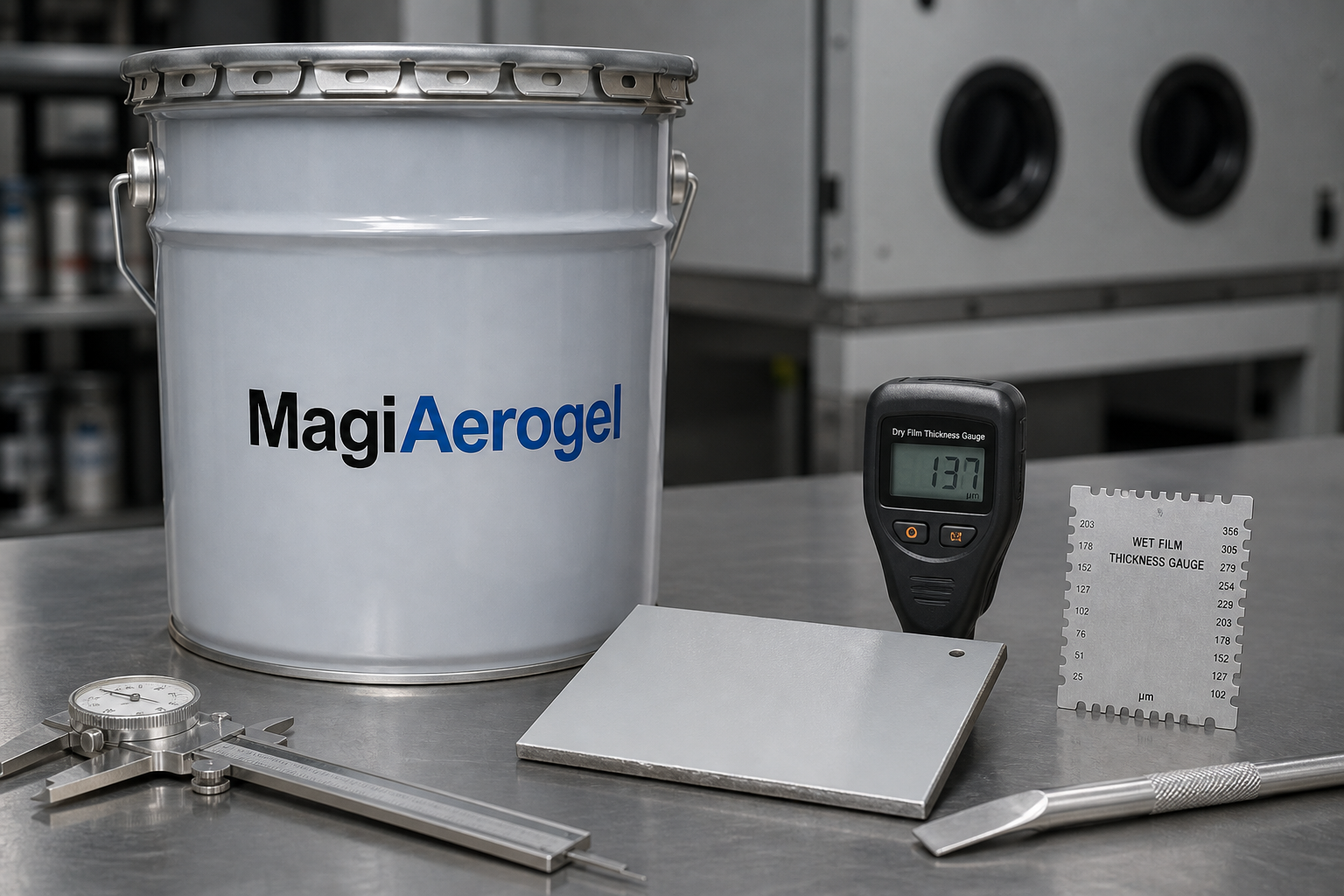
An aerogel coating project starts with the substrate, because adhesion and repeatable film build depend on the surface beneath the thermal layer. Before requesting a full quotation, identify the metal type, existing coating condition, repair zones, welds, edges, and service-temperature exposure.
- Record the substrate material and any existing coating system.
- Define cleaning, abrasion, and contamination-control steps.
- Identify areas where access, condensation, or maintenance may damage the cured film.
- Set the target dry-film thickness and the instrument used to measure it.
The silica thermal-barrier aerogel coating is a useful product reference when the project needs to compare preparation, application method, and curing evidence on industrial metal surfaces.
How should buyers compare aerogel paint data?
A useful comparison links test values to the applied system, including film build, substrate, and service condition. Buyers should ask which temperature range, thickness, and curing process sit behind every reported thermal or mechanical figure.
| Review point | Evidence to request | Why it matters |
|---|---|---|
| Substrate preparation | Cleaning and profile record | Supports adhesion consistency |
| Wet and dry film build | Gauge readings at multiple points | Controls thermal-layer repeatability |
| Curing | Time, temperature, and inspection record | Confirms the finished coating state |
| Service exposure | Temperature, moisture, and abrasion assumptions | Prevents a lab-only comparison |
Use the silica aerogel thermal-barrier coating as a second reference point when comparing coating documentation and surface-preparation requirements.
Where does aerogel coating fit best?
Aerogel coating is most useful when a thin, inspectable layer on a broad metal surface fits the equipment and maintenance plan. Tanks, housings, valve bodies, access panels, and selected equipment surfaces can be candidates when the coating system is specified for the actual substrate and service conditions.
It is not a default substitute for every thick insulation assembly. If the project needs mechanical protection, a large thermal resistance build-up, or coverage around complex geometry, compare the complete assembly before deciding that a thin coating alone is sufficient.

What should a trial application document?
A controlled trial turns a coating discussion into evidence that procurement and engineering can compare. Keep the documentation concise but repeatable across at least three representative surface areas.
- Photograph substrate condition before and after preparation.
- Record batch identification, mix or application method, and ambient conditions.
- Measure wet and dry film thickness at defined locations.
- Record cure time, visual defects, adhesion observations, and planned service limits.
For an overview of formats and relevant product links, see the MagiAerogel coating series.
Compare coating application requirements
Match silica aerogel coating selection to the real substrate, film-build, cure, and service conditions before requesting a trial.
FAQ
Which aerogel coating surface checks come first?
Start with substrate condition, preparation method, target thickness, curing plan, and service exposure. A trial should use at least 3 representative surface areas and document thickness at 5 or more points per area.
Does aerogel coating need a thickness-control record?
Yes. Record wet and dry film thickness so thermal and adhesion comparisons refer to the applied system. Review any variation greater than 20% before scaling up.
Can coating data be compared without application details?
Not reliably. Temperature, substrate, film build, curing, moisture, and mechanical exposure can all change the relevance of a reported value.