
What technical buyers often miss is that aerogel blanket insulation is an installation decision as much as a material decision. A silica aerogel blanket must match the operating temperature, available clearance, surface geometry, facing, seam plan, and handling method. These checks reduce cut waste and late field rework.
What should buyers record before comparing blanket quotes?
Start with the operating envelope and the complete installed build. Record continuous and peak temperature, target heat-loss or surface-temperature limit, substrate, minimum clearance, moisture exposure, and inspection access.
The first supplier request should also state:
- nominal thickness and permitted compression
- roll width, cut tolerance, and expected yield
- facing type and seam treatment
- bend radius and fastening method
- packaging, storage, and outer-jacket requirements
How does aerogel blanket insulation affect the thickness decision?
Silica aerogel can provide high thermal resistance in a thin flexible format, but the installed assembly controls the result. Compare thermal conductivity at the temperatures relevant to the project and confirm the test basis, density, orientation, and compression assumptions.
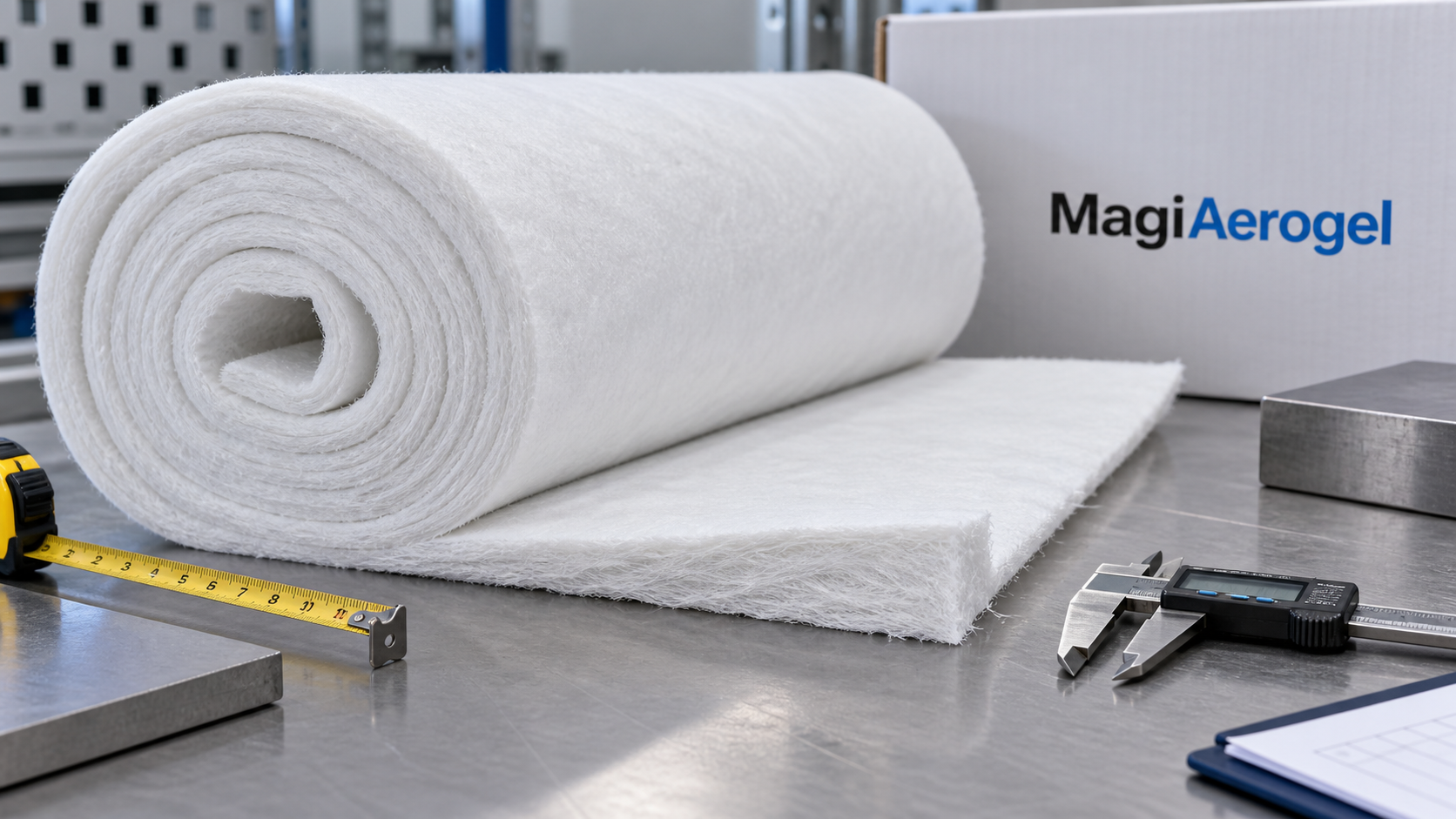
For a first reference point, review the 10 mm flexible aerogel blanket roll against the available clearance and the planned seam layout. Do not approve a nominal thickness without checking the minimum delivered thickness.
| Buyer check | Why it matters | Evidence to request |
|---|---|---|
| Thermal conductivity | Sets the heat-flow comparison | Test method and temperature points |
| Thickness tolerance | Controls fit and installed resistance | Nominal and minimum thickness |
| Compression limit | Prevents over-tight fastening | Limit in mm or % |
| Facing and seams | Protects handling and coverage | Facing data and seam method |
| Temperature range | Protects the whole assembly | Continuous and peak limits in °C |
Which flexible aerogel blanket format fits the surface?
Flexible blanket formats are useful on vessels, short pipe runs, flanges, and equipment with changing contours. Flat sections may need a different cutting plan, so compare roll width and seam count instead of selecting only by product name.
The white nonwoven aerogel blanket roll is a useful comparison when clean handling, cutting behavior, and facing stability matter. Ask for sample dimensions before releasing a large order.
What seam and overlap details prevent thermal gaps?
Plan the blanket around nozzles, supports, valves, inspection points, and removable sections. A practical starting range is 25 to 50 mm of seam overlap, but the final detail must follow the supplier’s installation guidance and the outer-jacket design.
Mark each penetration and record the installed thickness at seams. A trial section can show whether the blanket bridges a radius, springs back after fastening, or leaves a gap below the jacket.
How should packaging and storage be checked?
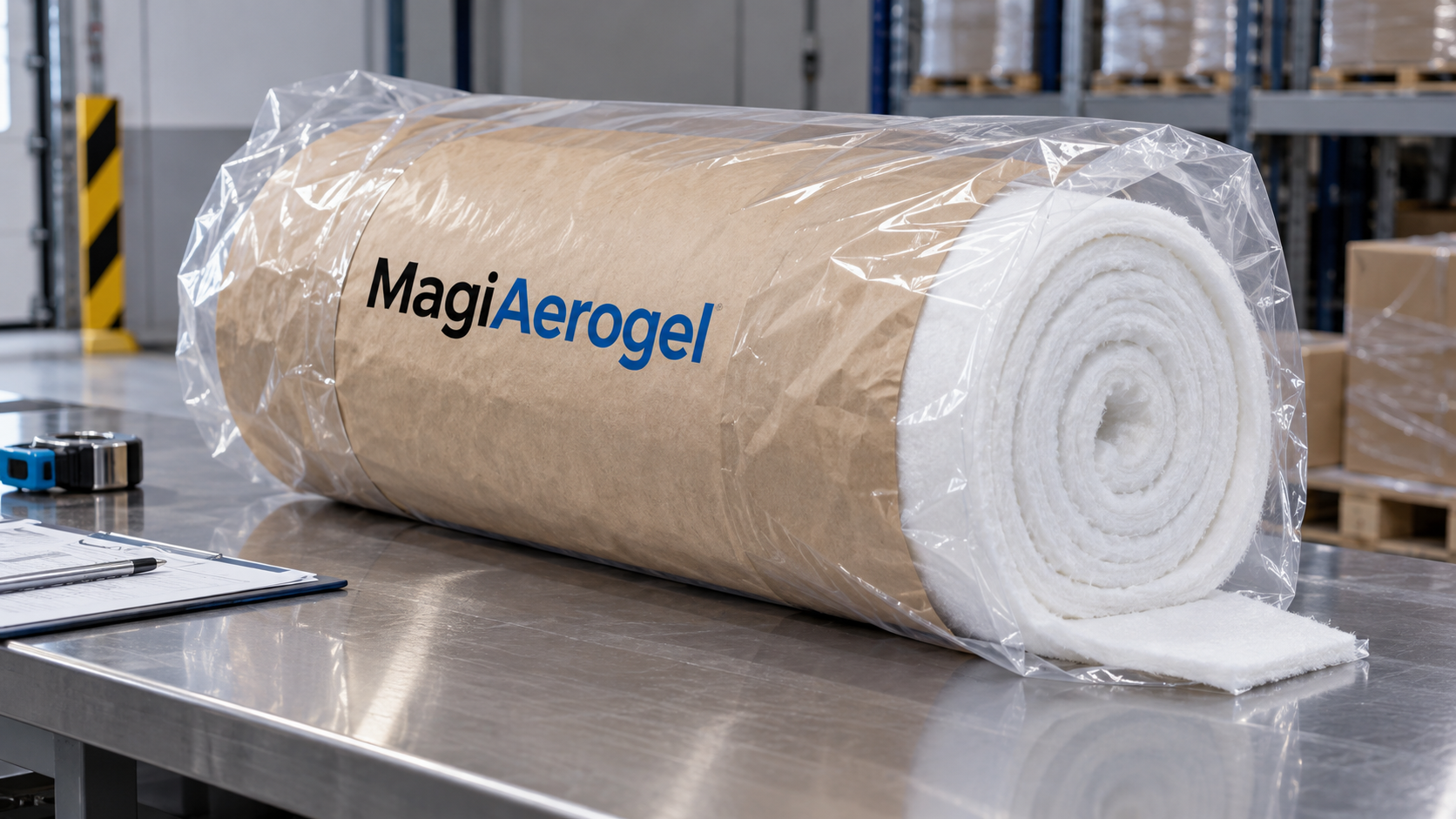
The blanket should arrive dry, protected from puncture, and easy to identify by lot or roll. Confirm packaging dimensions, moisture protection, storage temperature, and the allowed time between opening the package and installation.
The 10 mm silica aerogel insulation blanket can be reviewed together with the packaging and storage requirements. Record visible edge damage, compression, wetting, and unused offcuts during receiving inspection.
Which supplier documents should be approved?
Require a current datasheet, thermal test basis, thickness and density basis, temperature limits, facing details, roll dimensions, cut tolerance, packaging instructions, and sample record. For a project with more than 2 penetrations per section, also request a marked-up layout or fit review.
For broader energy-efficiency context, buyers may consult the U.S. Department of Energy. Product-specific limits and installation evidence must still come from the supplier.
What is the buyer-ready release checklist?
Release the material only when the product data and installed design agree. The approval record should state the temperature range, thickness tolerance, compression limit, facing, roll dimensions, overlap method, fastening method, inspection points, and storage rules.
Keep the final comparison within the selected product line and match the blanket format to the drawing.
The related guide on aerogel blanket installation rework checks can support the final sample review. Keep the product line, thickness basis, and surface geometry consistent between both documents.
Compare blanket options for your project
Match thickness, facing, packaging, and seam method to the vessel or pipe geometry before requesting a final quotation.
B2B FAQs
What thickness range should buyers compare for aerogel blanket insulation?
Start with the heat-loss target and available clearance, then compare common 5- to 10-mm constructions. Confirm the final thickness against operating temperature, surface geometry, compression, and outer protection.
How much seam overlap should be planned for a silica aerogel blanket?
Use a 25- to 50-mm overlap as an initial planning range, then confirm supplier guidance for the surface geometry, fastening method, and removable jacket.
What bend radius should be checked before ordering a flexible aerogel blanket?
Confirm the minimum bend radius in millimetres for the selected thickness and facing. Request a sample fit check when a vessel, nozzle, or short pipe run has less than 25 mm of clearance.
Which temperature limits must be documented for an aerogel blanket?
Require both continuous and peak limits in degrees Celsius for the complete assembly. Check separate limits for the silica aerogel blanket, facing, seam, adhesive, and fastening system.
<script type=”application/ld+json”> { “@context”: “https://schema.org”, “@type”: “FAQPage”, “mainEntity”: [ {“@type”: “Question”, “name”: “What thickness range should buyers compare for aerogel blanket insulation?”, “acceptedAnswer”: {“@type”: “Answer”, “text”: “Start with the heat-loss target and available clearance, then compare common 5- to 10-mm constructions. Confirm the final thickness against operating temperature, surface geometry, compression, and outer protection.”}}, {“@type”: “Question”, “name”: “How much seam overlap should be planned for a silica aerogel blanket?”, “acceptedAnswer”: {“@type”: “Answer”, “text”: “Use a 25- to 50-mm overlap as an initial planning range, then confirm the supplier guidance for the surface geometry, fastening method, and removable jacket.”}}, {“@type”: “Question”, “name”: “What bend radius should be checked before ordering a flexible aerogel blanket?”, “acceptedAnswer”: {“@type”: “Answer”, “text”: “Confirm the minimum bend radius in millimetres for the selected thickness and facing. Request a sample fit check when a vessel, nozzle, or short pipe run has less than 25 mm of clearance.”}}, {“@type”: “Question”, “name”: “Which temperature limits must be documented for an aerogel blanket?”, “acceptedAnswer”: {“@type”: “Answer”, “text”: “Require both continuous and peak limits in degrees Celsius for the complete assembly. Check separate limits for the silica aerogel blanket, facing, seam, adhesive, and fastening system.”}} ] } </script>