
Aerogel coating should be assessed as a silica aerogel surface-control system, not only as a quoted material price. Buyers need evidence that the coating matches the metal substrate, application method, dry-film thickness, cure window, and service conditions of the actual equipment. That process reduces rework and makes supplier comparisons more defensible.

Start with the equipment surface
The first decision is whether the surface is a realistic coating target. Record the metal type, existing finish, loose scale, oil or moisture exposure, access restrictions, and areas that must remain uncoated.
The MagiAerogel silica thermal-barrier coating provides a same-line reference for a buyer review of silica aerogel coating requirements.
Define the application question before comparing suppliers
Price alone does not establish application fit. Ask each supplier to state the preparation, application tool, number of passes, target film build, cure conditions, and any restrictions for the specific equipment surface.
- Is the substrate clean, dry, and stable enough for the proposed coating?
- Can the crew access edges, bolts, inspection doors, and masked boundaries?
- Does the proposed process define a measurable dry-film thickness?
Aerogel coating needs a recorded thickness check
A wet visual check is not enough. Use a suitable gauge after the documented cure stage and compare readings at the centre, edges, and representative high-risk locations. A panel with only one acceptable reading does not demonstrate consistent coverage.
| Buyer check | Minimum comparison record | Why it matters |
|---|---|---|
| Test panels | 3 panels | Separates a one-off result from a repeatable process |
| Surface conditions | 2 conditions where relevant | Shows preparation sensitivity |
| Thickness points | 5 or more per panel | Reveals edge and coverage variation |
| Cure observation | At least 24 hours or documented minimum | Distinguishes initial appearance from cured performance |
Keep the coating trial tied to the product line
For a coating-oriented equipment review, use the silica aerogel coating for industrial equipment as a second verified product reference. This is a different use case from flexible blanket installation and should be evaluated through surface preparation and cured-film evidence.
Inspect broad surfaces and detailed geometry separately
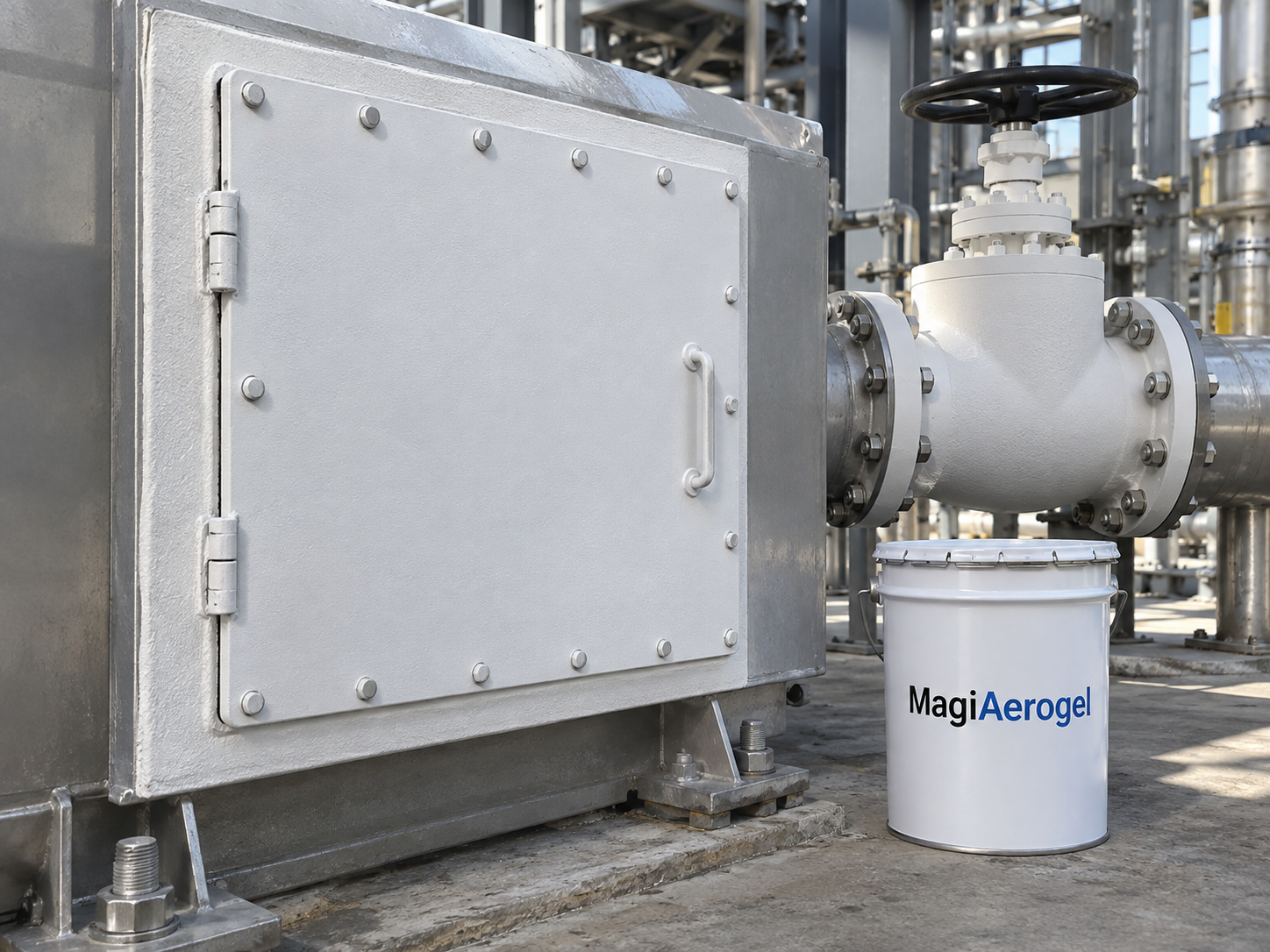
Flat access panels, housings, tank walls, and valve bodies can show different coating behaviour at their edges and fasteners. Review broad areas for uniformity, then inspect bolts, seams, hinges, openings, and transitions separately for thin spots, runs, pinholes, or incomplete coverage.
Confirm cure and service limits
Separate the application environment from the operating environment. A buyer should document the stated cure time, temperature limits, moisture restrictions, recoating guidance, and service exposure before releasing a larger batch.
Do not treat a visually clean sample as final approval until it has completed the documented cure window and the relevant inspection sequence.
Use a metal-surface reference for final comparison
The aerogel insulation coating for metal surfaces is a third verified product page for comparing metal-surface fit. Keep the project record focused on the selected coating system rather than mixing unrelated product categories into the approval decision.
Link the technical review to the coating series
Use the MagiAerogel aerogel coating series to review the active product family and related applications. For a complementary buyer checklist, read the aerogel coating surface-check guide before issuing the final test plan.
Decide from evidence, not a single datasheet line
The practical release record should contain the product name, batch details, substrate condition, application method, film-thickness readings, cure record, photographs, and inspection outcome. That record gives procurement and engineering teams the same basis for comparing a pilot with a production proposal.
For broader energy-efficiency context, consult the U.S. Department of Energy. For a coating-fit discussion, use the product reference cited above.
FAQs
What should buyers record before an aerogel coating trial?
Record the substrate type, visible condition, cleaning method, ambient conditions, and application method. Use at least 3 test panels when comparing more than one surface-preparation method.
How many thickness readings should a coating panel have?
Measure dry-film thickness at 5 or more points on each representative panel, including edges and a central area. Compare each reading with the supplier’s documented range rather than using one average only.
When should a silica aerogel coating be inspected after application?
Inspect after the documented cure period and again after at least 24 hours if the product instructions allow it. Record defects, coverage, and thickness under the same inspection conditions.
Can aerogel coating replace every insulation system?
No. A coating is selected for a defined substrate, service condition, and required film build. Confirm temperature, moisture, mechanical exposure, and access constraints before approving the application.
