
Aerogel coating usually disappoints when buyers expect a thin film thermal insulation coating to behave like a thick wrap system without setting limits on film build, cure time, or substrate condition. The practical answer is yes: aerogel coating can work well for space-limited assets, but silica aerogel insulation performs best when the buyer qualifies it as a controlled thermal barrier system rather than a paint-only shortcut.
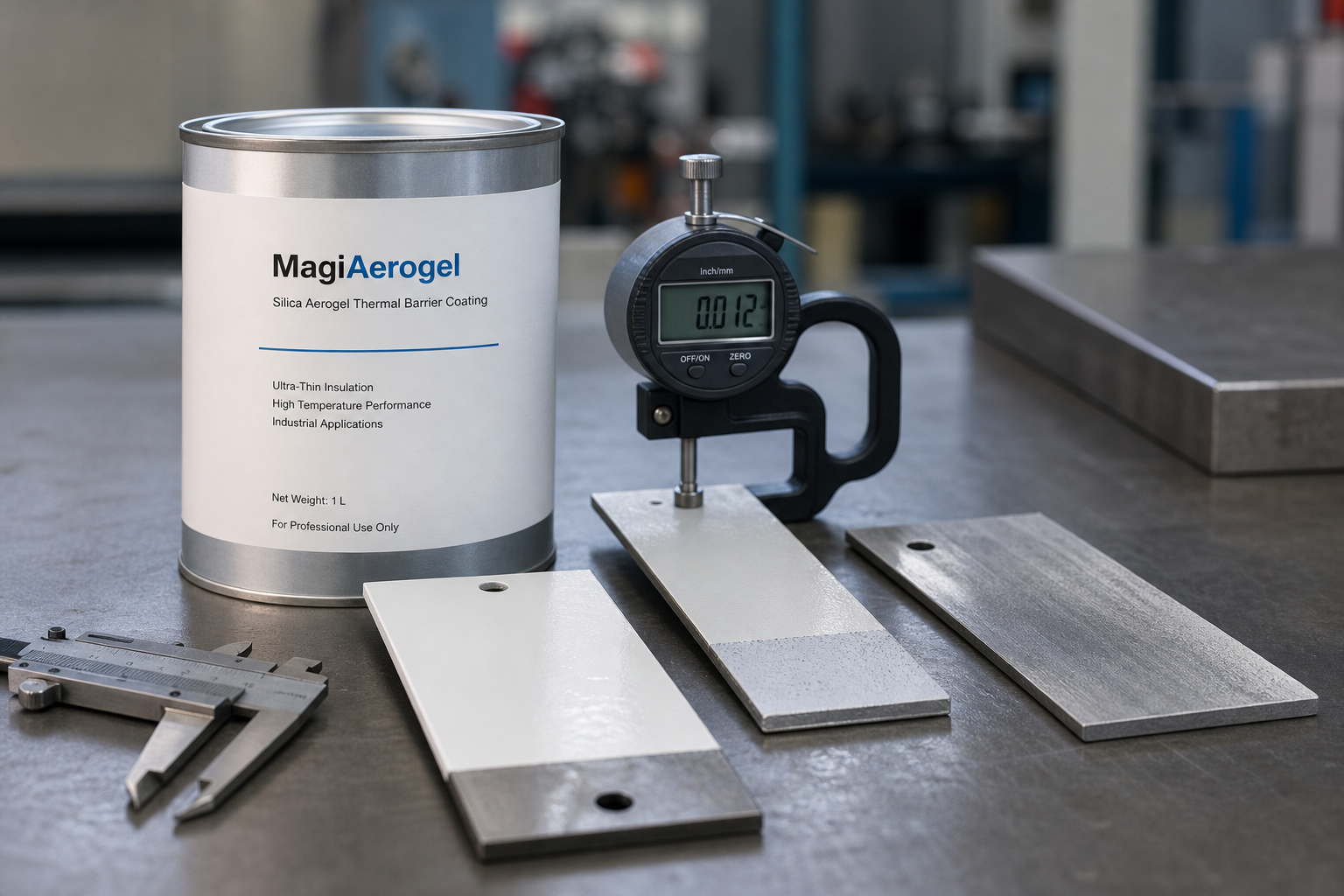
Where thin-film insulation really earns its budget
Technical buyers usually turn to aerogel coating after they hit one of these constraints:
- Clearance is too tight for thick insulation.
- Valves, housings, or access panels need easier maintenance access.
- Irregular geometry makes blankets slower to fit and repair.
- The team wants lower bulk on tanks, casings, or metal surfaces with touch-temperature concerns.
That is where a silica aerogel thermal barrier coating becomes credible. It gives the buyer a thinner insulation path for broad metal surfaces and detail-heavy equipment where traditional wraps can add too much thickness or too much labor.
Short answer: it works when three controls are fixed early
| Buyer control | What to define | Why it matters | | — | — | — | | Film build | Dry film target, pass count, and tolerance band | Thin builds that vary by even 0.5 mm to 1 mm can change thermal performance quickly. | | Substrate condition | Cleanliness, roughness, moisture, and metal temperature | Poor prep causes adhesion loss long before the thermal claim is tested fairly. | | Cure and inspection | Release window, thickness check, and repair rule | Teams need a repeatable acceptance method before they scale from patch to PO. |
If those three controls stay vague, sprayable aerogel coating often gets blamed for process mistakes that started before the first pass was applied.
Best-fit applications for aerogel coating for industrial surfaces
Aerogel coating for industrial surfaces is usually the stronger option when the buyer needs thin-build thermal control on:
- equipment housings with limited service clearance
- valve bodies, flanges, and metal access points that need periodic inspection
- tank walls or enclosures where a cured coating layer is easier to maintain than removable wraps
- retrofit surfaces where brackets, labels, or cover geometry make blanket installation awkward
A second aerogel coating silica thermal barrier option is worth comparing when the buyer wants to validate packaging, application method, and repair handling before a larger release.

What buyers should compare before approving production use
- Confirm the target surface temperature or heat-loss objective.
- Define the allowed dry film range and the number of passes.
- Set a surface-prep standard and moisture limit for the substrate.
- Require a pilot patch large enough to measure real thickness variation.
- Agree on cure timing, visual defect limits, and local repair rules.
- Check whether a topcoat or mechanical protection layer is needed.
What thin film insulation does not solve
The main mistake is treating aerogel thermal barrier coating as a universal replacement for thick insulation. It is not. If the duty needs maximum insulation depth, long hold temperatures, or more than about 10 mm of total thermal build, buyers should compare coating against blanket or panel options before committing to one format. The U.S. Department of Energy is a useful outside reference because it keeps the discussion tied to measurable system energy performance rather than marketing shorthand.
Final decision rule
If the real constraint is clearance, geometry, or easier maintenance access, aerogel coating can be a strong answer. If the real constraint is simply “we need the highest possible insulation thickness,” buyers should qualify thicker systems as well. MagiAerogel projects move faster when the buyer locks the film-build range, cure window, and substrate standard before the first production batch is approved.
FAQs
What dry film thickness should buyers test first?
Most first-pass trials start around 1 mm to 3 mm dry film thickness, then expand only after thickness readings and surface-temperature checks line up.
How long should a pilot area cure before inspection?
A practical hold point is usually 12 to 24 hours, but humid conditions or thicker builds can push the release window longer.
When does aerogel coating outperform thicker insulation?
It is strongest when the asset allows only a thin build, usually under about 10 mm total system thickness, or when access geometry makes blankets harder to maintain.
What substrate temperature range is safer for application?
Many teams try to stay near 5 C to 45 C during prep and application because colder or hotter metal can disrupt bonding and cure stability.