
Aerogel insulation sheets can reduce project risk when buyers verify the silica aerogel grade, thickness, dimensions, documentation, and enclosure fit before production release. A disciplined review is more reliable than selecting only by the lowest quoted price.

Why do aerogel insulation sheets need a structured buyer review?
The main risk is not simply thermal performance; it is a mismatch between the ordered sheet, the assembly, and the controlled project specification.
Technical buyers should confirm whether the intended format is a flat sheet, a cut panel, or a converted insulation component. The wording “aerogel insulation panels” may describe a finished assembly in one quotation and a cut silica aerogel sheet in another, so the purchase specification should define the actual construction.
The MagiAerogel silica aerogel sheet product provides a starting point for comparing sheet-format insulation, but the final production grade still needs project-specific confirmation.
What should buyers verify before comparing aerogel sheet quotes?
Compare measurable inputs and documentation first, then compare price.
Use a short checklist before supplier selection:
- material description and silica aerogel content or composite structure
- nominal thickness, dimensional tolerance, and cut-edge condition
- thermal-conductivity test basis and declared service-temperature limit
- compression, handling, and fastening constraints for the assembly
- lot traceability, packaging, and revision-controlled technical documents
Do not treat a generic “aerogel sheet” label as a complete specification. For industrial procurement, the quote should connect each claimed value to a test method, grade, or controlled document.
How can buyers compare aerogel sheets for enclosure integration?
The best sheet is the one that fits the enclosure without forcing unapproved gaps, compression, or rework.
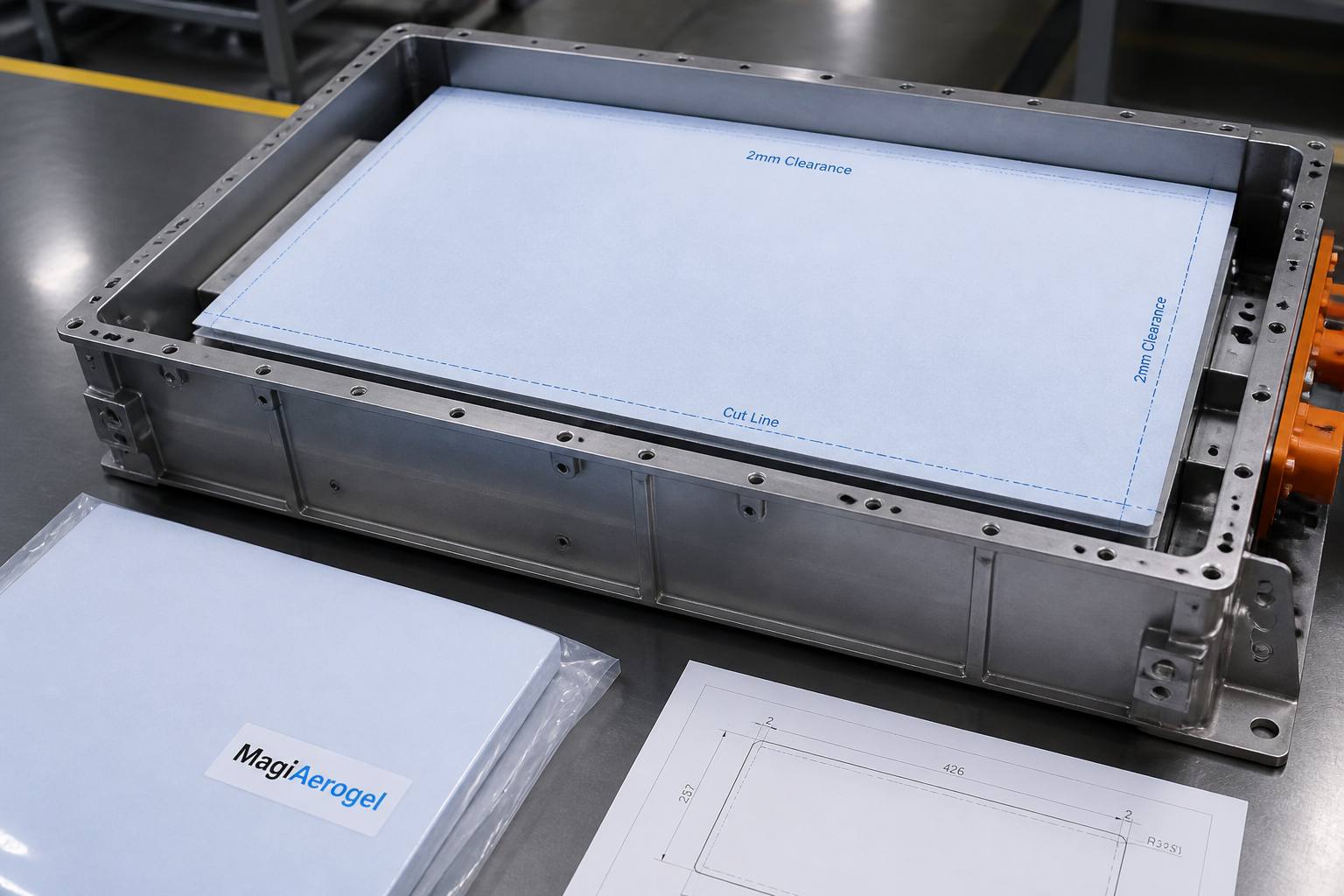
Review the drawing with the supplier before cutting. Mark the cut line, fastener zones, corner radii, and a realistic edge clearance; then measure the sample against the same reference points. A 2 to 5 mm allowance can be a useful starting point for review, but it is not a universal design rule.
For compact assemblies, compare the sheet thickness against available clearance, adjacent components, service access, and the required cladding or cover. This is where “aerogel insulation panels” and “aerogel panels” should be translated into an exact bill-of-materials description.
Compare the right sheet format
Use the product reference to align sheet geometry, documentation, and enclosure-fit questions before requesting a project quotation.
Which sample tests reduce aerogel insulation sheet risk?
A small, repeatable inspection plan can expose fit and consistency problems before they reach production.
For each sample, record the supplier lot and inspect at least five thickness points. Check the length and width against the drawing, inspect the cut edge for delamination or damage, and document whether the sheet returns to shape after normal handling.
| Check | Suggested review point | Buyer record |
|---|---|---|
| Thickness | Five measured points | Average and range |
| Dimensions | Drawing reference edges | Length, width, tolerance |
| Edge quality | Corners and cut lines | Damage or delamination |
| Fit | Enclosure sample | Clearance and interference |
| Documents | Current revision | File name and approval date |
The values above are a review framework, not unverified product guarantees. Release criteria should follow the project drawing and the supplier’s current technical documents.
How should silica aerogel sheets be prepared for production release?
Production approval should connect the physical sample, the controlled drawing, and the final purchasing description.
Before order release, confirm packaging protection, labeling, quantity basis, and whether the supplier will provide standard sheets or converted panels. Ask for the current datasheet and any applicable test or compliance records; the U.S. Department of Energy is also a useful technical energy reference when framing the broader efficiency objective.
Keep the approved sample, drawing revision, inspection record, and quotation together. This reduces ambiguity when the same project later requires repeat orders, export packaging, or a change in enclosure geometry.
FAQs for technical buyers of aerogel insulation sheets
What thickness should buyers request for an aerogel sheet?
Start with a target thickness range such as 3 to 10 mm, then confirm thermal, mechanical, and clearance requirements for the assembly. The final grade should be approved against the supplier’s current datasheet before release.
How much clearance should an enclosure design allow?
A practical review can begin with a 2 to 5 mm installation allowance around cut edges and fasteners, subject to the enclosure geometry and compression limits. Confirm the permitted tolerance with the engineering drawing and final sample.
What sample checks reduce sheet sourcing risk?
Use at least three checks: thickness at five points, dimensional fit against the drawing, and visual inspection of every cut edge. Record the lot, test date, and measured values before approving production.
Which documents should a B2B buyer request?
Request the technical datasheet, batch or lot traceability, thermal-conductivity test basis, service-temperature limit, and applicable fire or compliance reports. Document revisions should be controlled before a project order is placed.
For panel-format evaluation, compare the silica aerogel sheet insulation panel with the aerogel insulation panel for industrial use. Confirm final dimensions, operating conditions and documentation requirements before selecting a project specification.