
Aerogel powder sourcing succeeds when buyers qualify how silica aerogel powder behaves in the intended formulation, not just how it looks in a data sheet. Density, hydrophobicity, dispersibility, packaging integrity, and lot traceability can all affect a thermal filler or coating system after production begins.
Which aerogel powder checks should happen before a trial?
Start with a written acceptance plan that connects the material to the final formulation. Identify the required particle range, bulk density, moisture sensitivity, hydrophobicity, mixing sequence, and the product-performance measure that will decide approval.
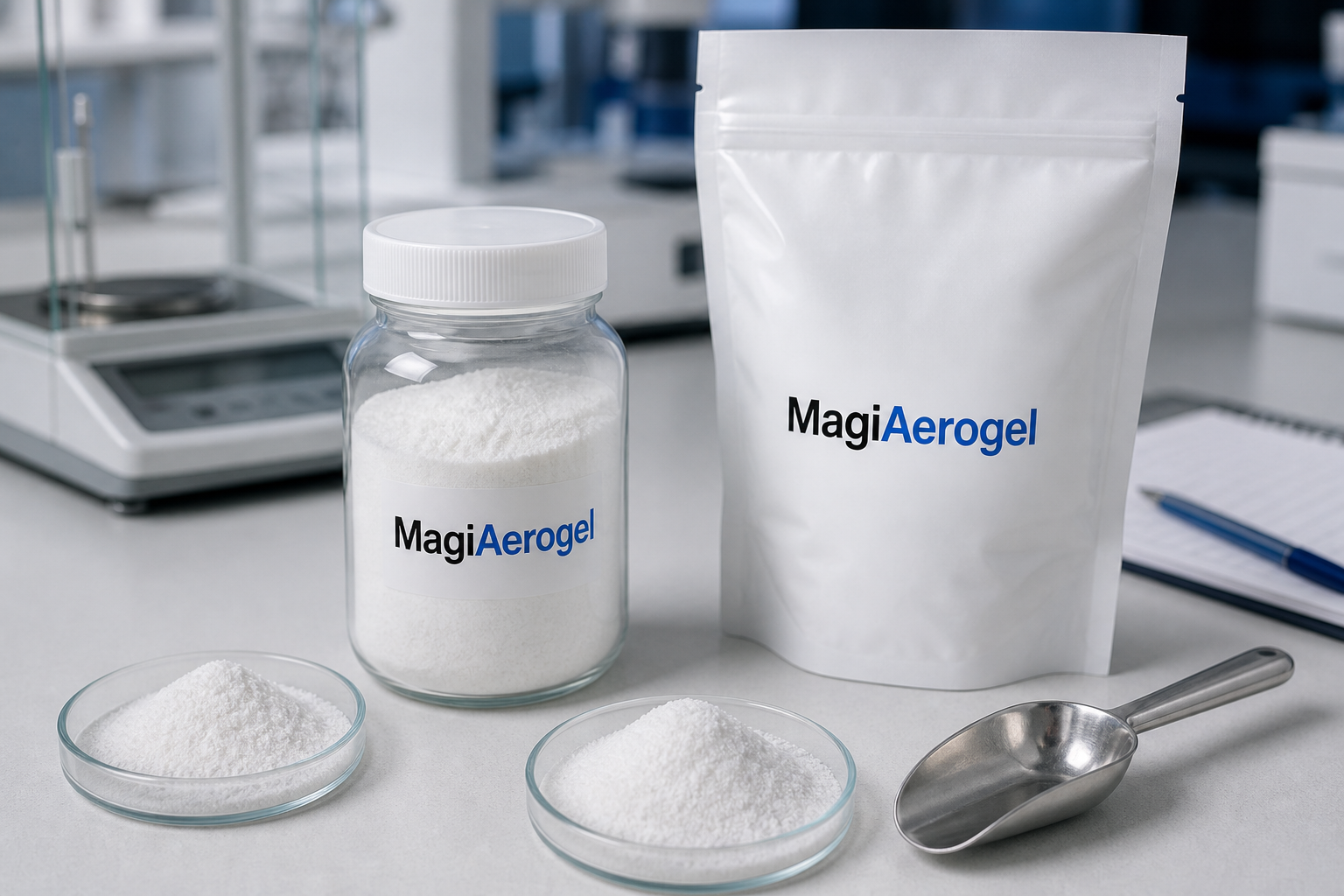
The MagiAerogel silica aerogel powder is a starting point for reviewing product-line information. It should be followed by a controlled trial using the same binder, additive package, mixer, and process conditions expected in production.
How should buyers compare powder lots?
Lot comparison should use repeatable handling steps before any conclusion is made about formulation performance. Screen at least 3 lots when the application is sensitive to dispersion or density, and record each result in the same test format.
| Qualification area | What to record | Why it matters |
|---|---|---|
| Packaging condition | Seal, container damage, net weight, and lot number | Protects traceability before the material enters production |
| Powder handling | Flow, agglomeration, dust control, and transfer method | Reveals process changes that can alter dosing |
| Formulation behavior | Mixing time, viscosity or rheology response, and dispersion | Connects the powder to the actual application |
| Final result | Thermal, surface, mechanical, or density target | Tests whether the selected lot meets the use case |
Review the MagiAerogel bulk aerogel powder supply option when planning container size, receipt inspection, and lot documentation.
What does hydrophobic aerogel powder change?
Hydrophobicity can matter when moisture exposure, storage humidity, or a water-containing formulation changes the material’s behavior. Do not assume the label alone predicts the result; verify it using the planned storage and mixing conditions.

When the powder is used as an aerogel thermal filler, document the order of addition, mixing energy, hold time, and any defoaming or wetting step. A small pilot batch, typically 1 to 5 kg, gives a better basis for release than a visual sample alone.
Which supplier documents reduce batch risk?
The most useful documents tie the delivered material to the approved trial. Request a current specification, lot identifier, packaging and storage instructions, test certificate where available, and a clear process for reporting a deviation.
The MagiAerogel silica aerogel thermal filler can be used as a product reference while the buyer validates the exact formulation and performance limits.
How should a buyer set a release decision?
Approve a lot only when it meets the agreed material and formulation checks together. Keep a sealed reference sample, the receiving record, laboratory results, process settings, and the final test result. That evidence makes a later adjustment traceable rather than speculative.
The MagiAerogel aerogel powder series keeps the article connected to the active product family. For a related checklist, see the aerogel powder buyer checks.
Review aerogel powder options
Compare powder format, bulk handling, and formulation-fit evidence before starting a production trial.
Buyer takeaway
A reliable aerogel powder supplier supports a repeatable lot-qualification method, not a one-time sample decision. Use the trial record to define release criteria and protect the formulation from avoidable variation. General energy-efficiency context is available from the U.S. Department of Energy.
B2B FAQs
How many aerogel powder lots should be screened before a production trial?
Screen at least 3 lots when the formulation is sensitive to dispersion, density, or hydrophobicity. Use the same mixing and conditioning method for every lot so the comparison identifies material variation rather than process variation.
What packaging information is important for silica aerogel powder?
Record net weight, lot number, production date, moisture protection, seal condition, and storage guidance for every container. Inspect at least 2 containers per delivery for damaged seals, visible contamination, or unexpected compaction.
Can aerogel powder be accepted using only a particle-size statement?
No. Particle-size information is useful, but buyers should also check density, hydrophobicity where relevant, dispersibility, and the final formulation result. A 1 to 5 kg pilot batch usually provides more reliable evidence than a paper-only approval.
How long should a buyer retain an aerogel powder reference sample?
Keep a sealed reference sample from each approved lot for at least the production or project acceptance period. Label the sample with lot, receipt date, storage condition, and the associated formulation record.