
Choosing an aerogel powder supplier requires more than comparing one headline thermal value. A technical buyer should connect silica aerogel grade, moisture control, test basis, packaging, and the intended formulation before approving a repeat order.
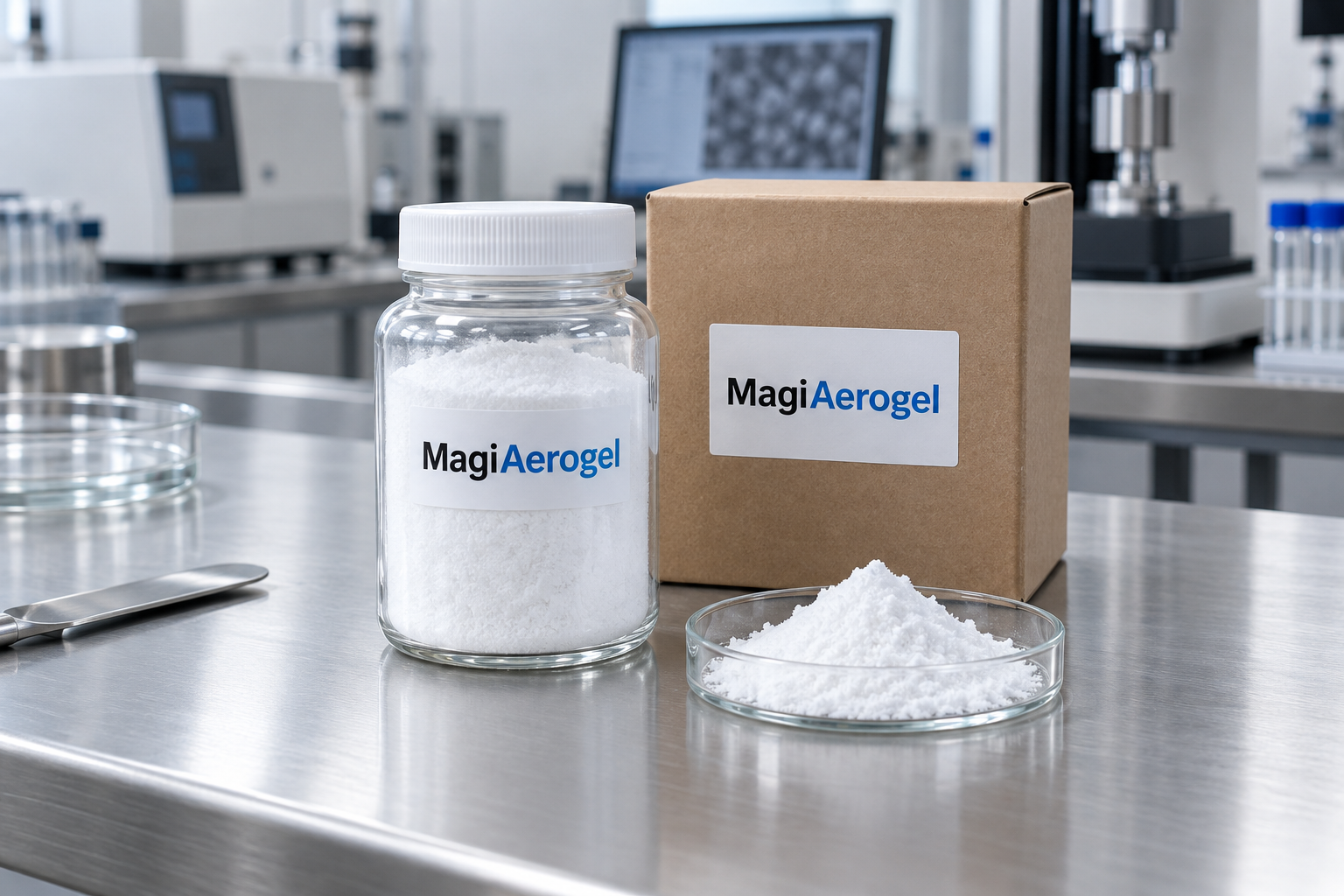
Define the aerogel powder application first
Write down the formulation or processing step before comparing supplier descriptions. State whether the silica aerogel powder is used as a thermal filler, lightweight additive, moisture-sensitive blend component, or another documented function.
Review the silica aerogel powder product against the application brief. Include target loading, mixing equipment, dispersion requirement, operating temperature, and downstream handling limits.
Compare grade and batch evidence
Ask the supplier to identify the proposed grade and the values controlled from batch to batch. Useful fields include particle-size range, density basis, hydrophobic treatment, moisture limit, and the test method for each value.
For a bulk-material comparison, review the aerogel powder bulk material supply option. Keep the quotation tied to a named grade and revision so a later sample is not compared with a different material description.
Set measurable moisture and storage limits
Silica aerogel powder can be affected by handling and storage conditions. State the moisture limit as a percentage and request the sampling location, test method, and retest period. Define whether the material must remain sealed until use.
Record warehouse temperature, humidity exposure, opened-container handling, and the maximum time between opening and formulation. These details help separate a material issue from a storage or process issue during trial work.
Match thermal data to one test basis
Thermal conductivity values are useful only when the measurement basis is comparable. Ask for the reported value in W/(m·K), mean test temperature, density or conditioning basis, sample preparation, and test standard.
The silica thermal filler powder option can be assessed with the same comparison sheet. Do not combine values from different temperatures or conditioning states into one ranking.
Check loading and dispersion limits
Define the trial loading in weight percentage or kilograms per batch and record the mixing sequence. Note whether the process uses dry blending, liquid addition, vacuum handling, or a pre-dispersion step.
Ask for acceptable appearance and dispersion criteria after mixing. If the formulation has a viscosity, flow, or settling limit, include the measurement method and the inspection time point.
Make packaging and logistics explicit
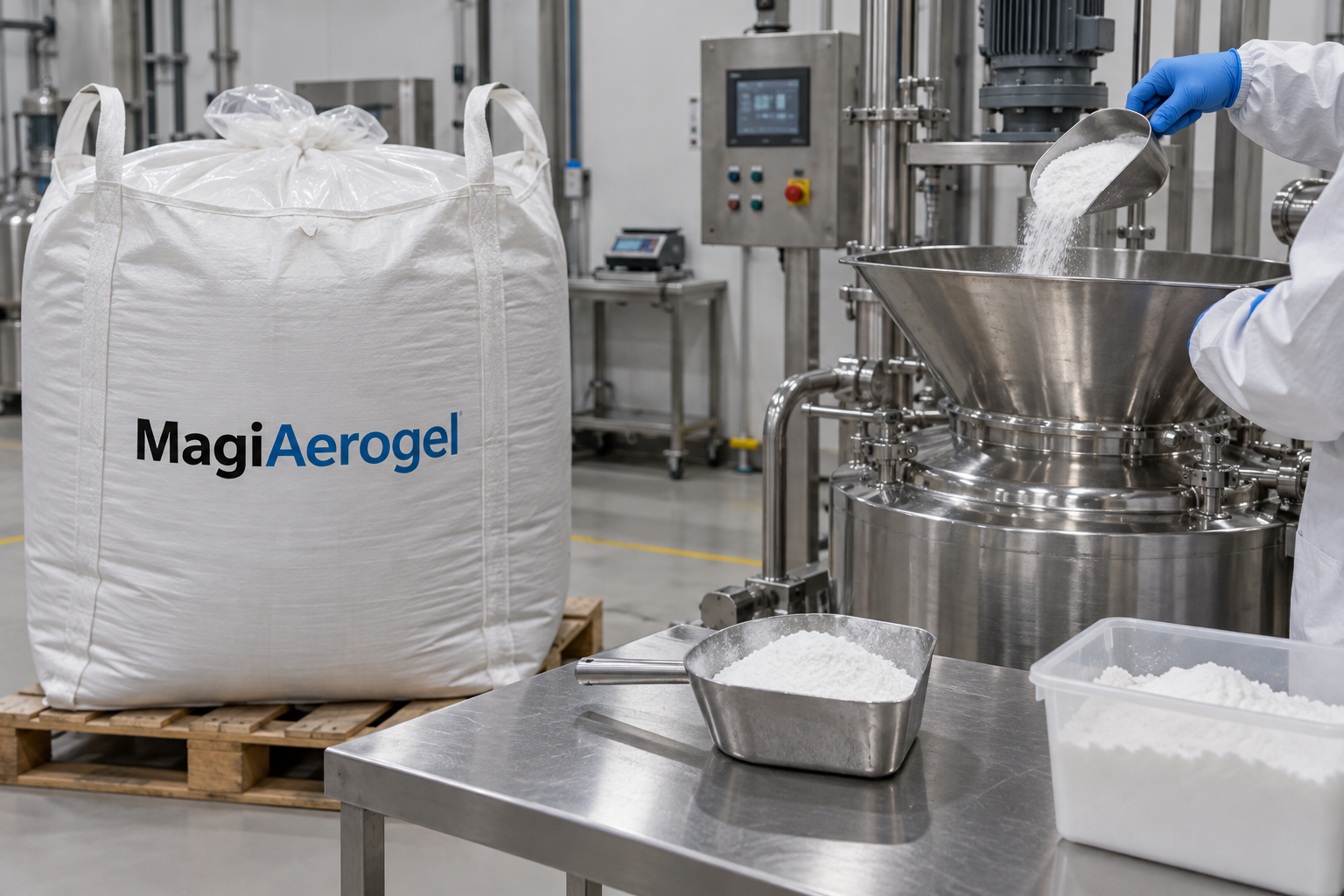
Specify net mass per bag or container in kilograms, inner-barrier material, seal type, pallet quantity, and transport protection. Request the lot number and packing date on shipping documents.
For repeat purchasing, compare lead time, minimum order quantity, sample availability, and the documents supplied with each lot. Keep these commercial fields separate from technical performance claims.
Build a repeat-order acceptance checklist
Use the same checklist for sample approval and repeat deliveries:
- Confirm grade, lot number, net mass, and packing date.
- Record moisture limit, test method, and storage condition.
- Compare thermal data at the same temperature and conditioning basis.
- Verify the required loading range and dispersion result in the target process.
- Retain the supplier data sheet and certificate with the approved grade revision.
For a related batch-control discussion, read how buyers control aerogel powder batch risk. For general energy-efficiency context, consult the U.S. Department of Energy. Keep the final specification focused on measurable acceptance points rather than one headline value.
Review your aerogel powder sourcing brief
Share the target loading, moisture limit, thermal basis, and monthly volume for a project-specific review.
Frequently asked questions
What quantity should buyers request when testing aerogel powder?
Specify a trial quantity in kilograms and the expected monthly volume in kilograms. Ask for both sample and repeat-order pack sizes so the quotation reflects the actual purchasing plan.
Which moisture controls should be included in a powder quotation?
Request the moisture limit as a percentage, test method, sampling point, sealed-storage requirement, and retest period before use.
How should buyers compare aerogel powder thermal data?
Compare thermal conductivity in W/(m·K) at the same mean temperature, density basis, conditioning method, and test standard. Keep values from different bases separate.
What bulk packaging limits should be confirmed?
Confirm net mass per bag or container in kilograms, inner-barrier material, sealing method, pallet quantity, and transport moisture protection.