
Buying aerogel blanket insulation requires more than comparing one thermal-conductivity value. A technical buyer should connect silica aerogel blanket thickness, temperature limits, roll dimensions, joint allowance, handling method, and trial evidence before approving repeat supply.
Define the aerogel blanket insulation brief
Record the equipment surface, available clearance, operating temperature, target surface temperature, insulation length, roll width, annual demand, and delivery cadence. Keep the first fit trial separate from the production requirement so a sample does not become evidence of repeatability.
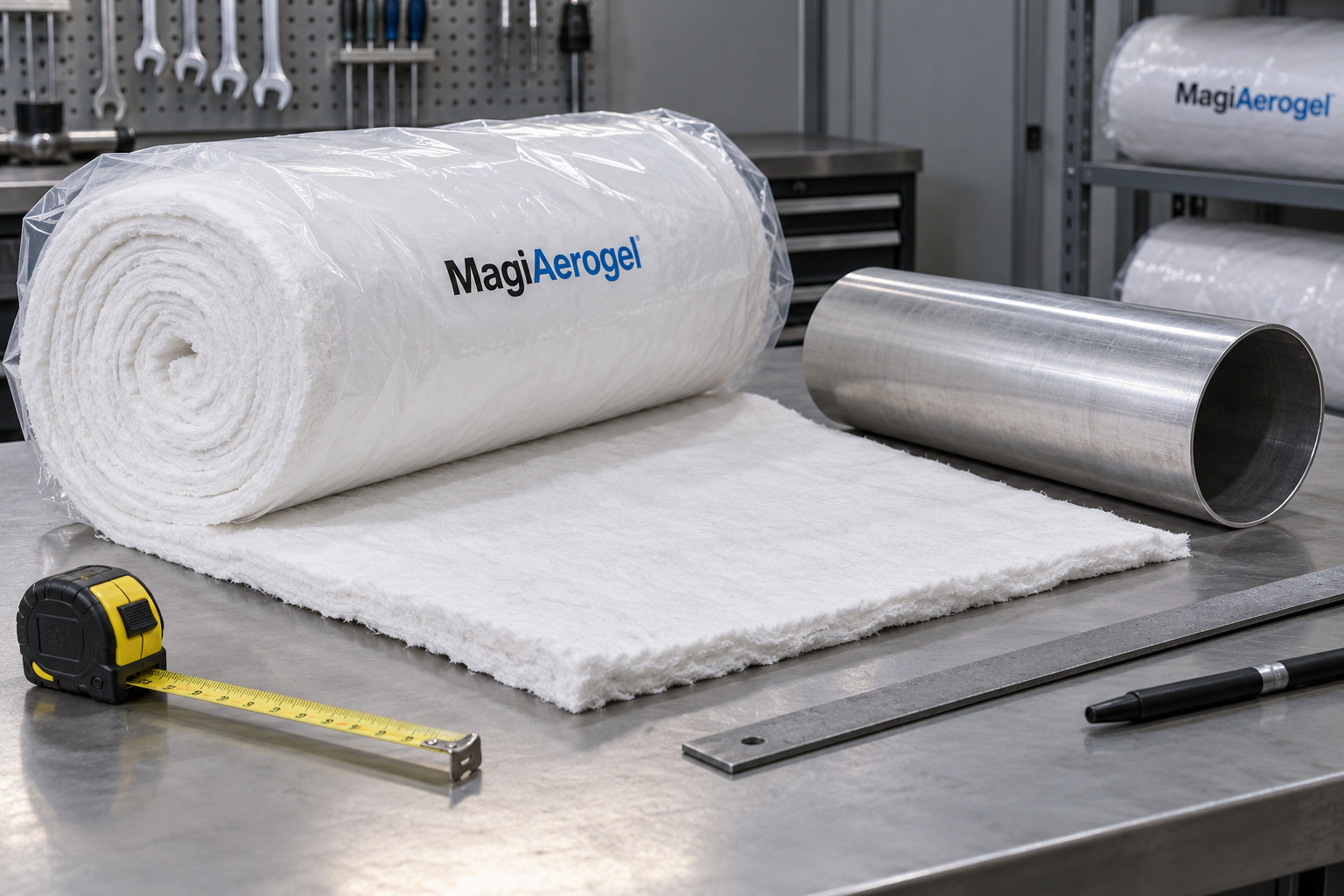
Review the 10 mm flexible aerogel blanket roll against the latest drawing. Ask for thickness, width, length, facing, density, packaging, and intended cutting method in the same quotation request.
Compare thickness and thermal data
Compare thickness in millimeters under one measurement condition. A 5 to 10 mm range may suit tight clearances while a 10 to 20 mm range may support a different thermal target. The correct choice depends on the heat path and available space rather than the largest headline value.
Compare thermal conductivity in W/(m·K) only when temperature, density, moisture condition, thickness, and test standard are aligned. Record the test basis and avoid treating a value from one thickness as proof for every roll size.
Confirm temperature and facing limits
Confirm continuous and short-term temperature limits in degrees Celsius. Check the full operating range, start-up peaks, shutdown cycles, adjacent hot spots, and the compatibility of the facing or outer protection layer.
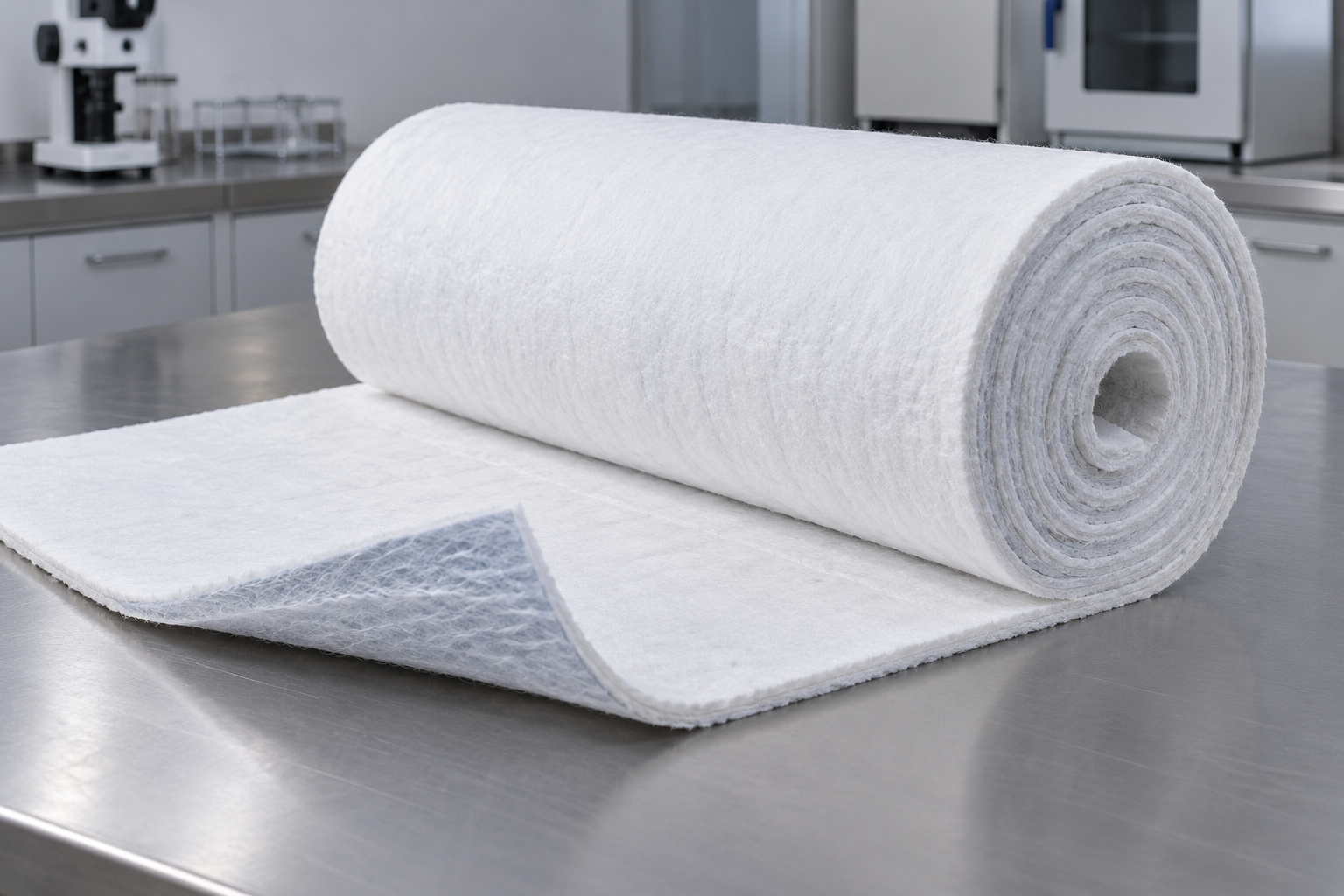
The white nonwoven aerogel blanket roll should be reviewed against the actual installation environment. Record whether the facing must resist abrasion, moisture, compression, or repeated maintenance access.
Plan roll dimensions and joint allowance
Lock finished width, roll length, thickness, edge condition, cut lines, and allowable tolerance in millimeters. A small width or thickness difference can change overlap, access clearance, and the time needed to close a joint.
Use at least 3 fit checks across straight sections, corners, and service-access areas. Record gaps, overlap, compression, fastener clearance, and the time needed to correct each condition. A measured trial is stronger release evidence than a single visual inspection.
Control cutting handling and storage
Keep rolls sealed and dry until they reach the work area. Record lot number, packing date, damaged packaging, moisture exposure, and the maximum time after opening. Store blankets away from standing water, oil, sharp edges, and uncontrolled stacking loads.
Define the cutting tool, dust-control method, edge protection, facing direction, and fixing method before the first production batch. The 10 mm silica insulation blanket should be assessed using the same handling method planned for production.
Build an acceptance record
Use one acceptance record for each lot:
- Confirm thickness, width, length, facing, density, and temperature limits.
- Record product lot, packaging condition, storage condition, and inspection date.
- Compare thermal data using one test basis and one thickness.
- Record at least 3 fit and clearance measurements on the trial equipment.
- Define the response time for damaged packaging, failed fit, or out-of-range data.
For a related installation review, read aerogel blanket insulation installation checks. For broader energy-efficiency context, consult the U.S. Department of Energy. Keep the purchasing decision tied to measurable silica aerogel blanket evidence.
Review your aerogel blanket insulation brief
Share the thickness range, equipment clearance, temperature profile, joint allowance, and trial measurements for a project-specific review.
Frequently asked questions
What thickness range should buyers compare for aerogel blanket insulation?
Compare a defined range such as 5 to 10 mm or 10 to 20 mm against the available clearance, target thermal resistance, and the supplier’s test basis.
What operating temperature limits should be confirmed?
Confirm continuous and short-term limits in degrees Celsius, then compare them with the equipment range, start-up peaks, shutdown cycles, and facing system.
How much blanket overlap should an installation trial allow?
Set the overlap and joint allowance in millimeters on the drawing; a practical trial should record at least 3 joint and clearance conditions before release.
How should a blanket lot be checked before acceptance?
Check thickness, width, length, packaging, lot identity, moisture exposure, edge condition, and at least 3 measured fit points before approving repeat supply.
<script type=”application/ld+json”> {“@context”:”https://schema.org”,”@type”:”FAQPage”,”mainEntity”:[{“@type”:”Question”,”name”:”What thickness range should buyers compare for aerogel blanket insulation?”,”acceptedAnswer”:{“@type”:”Answer”,”text”:”Compare a defined range such as 5 to 10 mm or 10 to 20 mm against the available clearance, target thermal resistance, and the supplier’s test basis.”}},{“@type”:”Question”,”name”:”What operating temperature limits should be confirmed?”,”acceptedAnswer”:{“@type”:”Answer”,”text”:”Confirm continuous and short-term limits in degrees Celsius, then compare them with the equipment range, start-up peaks, shutdown cycles, and facing system.”}},{“@type”:”Question”,”name”:”How much blanket overlap should an installation trial allow?”,”acceptedAnswer”:{“@type”:”Answer”,”text”:”Set the overlap and joint allowance in millimeters on the drawing; a practical trial should record at least 3 joint and clearance conditions before release.”}},{“@type”:”Question”,”name”:”How should a blanket lot be checked before acceptance?”,”acceptedAnswer”:{“@type”:”Answer”,”text”:”Check thickness, width, length, packaging, lot identity, moisture exposure, edge condition, and at least 3 measured fit points before approving repeat supply.”}}]} </script>