
An aerogel coating should be qualified as a complete surface-applied system, not selected from a headline thermal claim alone. Buyers need evidence that the silica aerogel formulation, substrate preparation, application route, inspection method, and batch controls can be repeated on the actual equipment.
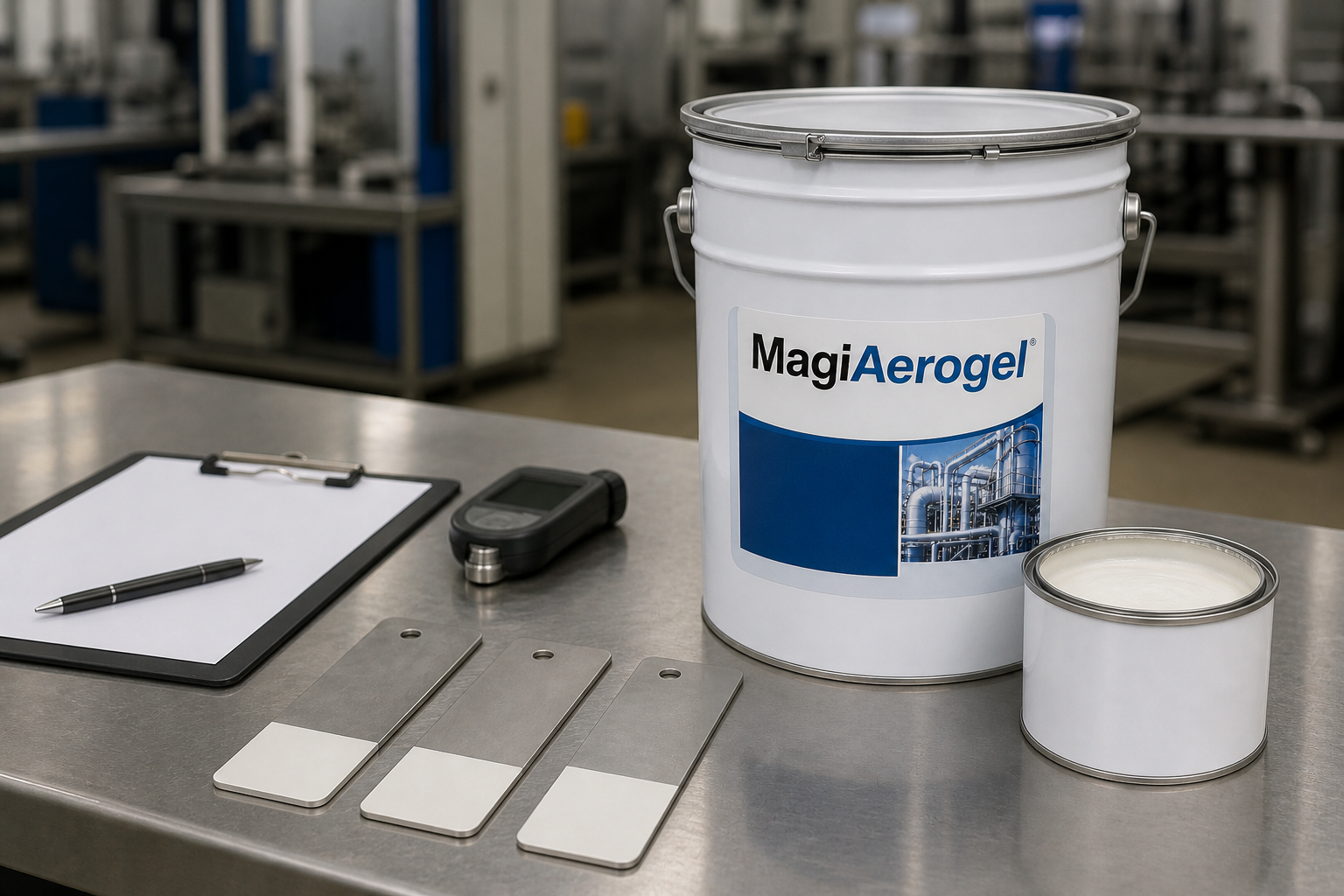
What should an aerogel coating qualification prove?
A useful qualification proves fit, repeatability, and inspectability on the intended substrate.
The first review should define the equipment surface, access limits, operating environment, maintenance plan, and reason for using a low-profile coating. This prevents an aerogel paint comparison from becoming a price-only exercise that ignores preparation and acceptance requirements.
Use the published MagiAerogel silica thermal barrier coating as one product reference. Ask the supplier to connect each proposed coating grade to a written substrate and application review rather than relying on generic performance language.
Which buyer inputs control coating selection?
Substrate condition and site workflow determine whether a coating proposal can move into a pilot.
Collect the following inputs before requesting samples or quotations:
- Substrate material, existing finish, surface condition, and preparation constraints.
- Equipment geometry, access points, shutdown window, and inspection access.
- Intended application method, available tools, and site environmental controls.
- Thermal objective, exposure conditions, maintenance cycle, and repair expectations.
- Required packaging, documentation, batch traceability, and destination market.
The silica aerogel coating for industrial equipment provides a second verified product option for projects centered on housings, fabricated assemblies, and difficult surface geometries.
How should buyers compare coating evidence?
Compare evidence against the same substrate and acceptance plan so supplier claims remain comparable.
| Review point | Minimum buyer evidence | Release question |
|---|---|---|
| Product identity | Grade, batch, packaging, and current data | Is the supplied material traceable? |
| Surface preparation | Written cleaning and preparation sequence | Can the site reproduce the condition? |
| Application control | Tool, sequence, coverage record, and observations | Can the process be repeated? |
| Inspection | At least 3 recorded points per representative area | Are results consistent across the surface? |
| Repair plan | Written touch-up and reinspection method | Can damaged areas be restored predictably? |
For broader energy-management context, buyers can consult the U.S. Department of Energy while keeping final product limits tied to supplier documentation and project-specific validation.
Review the coating series
Compare verified coating products against the same substrate, application, and inspection plan before releasing a production order.
What should a coating pilot record?
A controlled pilot turns an application demonstration into procurement evidence.
Start with at least one representative panel or a controlled area of about 1 square meter. Record the substrate condition, batch number, preparation steps, application tool, start and finish times, visible surface result, and at least three inspection points.

If the project may use aerogel coating spray, roller, or brush application, do not assume the same workflow applies to every grade. The supplier and applicator should confirm the approved route, equipment setup, and inspection method before the site trial.
How can buyers reduce repeat-order risk?
Repeat orders need controlled references, not only an approved first delivery.
Compare at least two production batches when consistency is a critical condition. Retain the approved sample, purchase specification, batch records, inspection results, packaging agreement, and application instructions under one controlled revision.
The related guide on aerogel coating recoat consistency explains why surface condition, process timing, and inspection discipline should stay connected during later maintenance or expansion work.
B2B aerogel coating FAQs
Use these numeric checkpoints to structure a pilot, then replace them with project-approved limits where required.
How large should an initial aerogel coating trial be?
Start with at least one representative substrate panel or a controlled area of about 1 square meter. Keep the surface preparation, batch number, application method, and inspection record together before approving a wider release.
How many inspection points should a coating pilot include?
Use at least three recorded inspection points across each representative test area. Add more points around edges, joints, repairs, or geometry changes where application consistency may differ.
How many batches should buyers compare before approval?
Review at least two production batches when repeatability is a critical purchase condition. Record appearance, handling, application observations, and agreed acceptance results for each batch.
How long should qualification records be retained?
Keep the approved sample, batch data, inspection results, and application instructions for the full project life or at least the contractual warranty period. Use one controlled revision number so purchasing and site teams work from the same specification.
<script type=”application/ld+json”> { “@context”: “https://schema.org”, “@type”: “FAQPage”, “mainEntity”: [ {“@type”: “Question”, “name”: “How large should an initial aerogel coating trial be?”, “acceptedAnswer”: {“@type”: “Answer”, “text”: “Start with at least one representative substrate panel or a controlled area of about 1 square meter. Keep the surface preparation, batch number, application method, and inspection record together before approving a wider release.”}}, {“@type”: “Question”, “name”: “How many inspection points should a coating pilot include?”, “acceptedAnswer”: {“@type”: “Answer”, “text”: “Use at least three recorded inspection points across each representative test area. Add more points around edges, joints, repairs, or geometry changes where application consistency may differ.”}}, {“@type”: “Question”, “name”: “How many batches should buyers compare before approval?”, “acceptedAnswer”: {“@type”: “Answer”, “text”: “Review at least two production batches when repeatability is a critical purchase condition. Record appearance, handling, application observations, and agreed acceptance results for each batch.”}}, {“@type”: “Question”, “name”: “How long should qualification records be retained?”, “acceptedAnswer”: {“@type”: “Answer”, “text”: “Keep the approved sample, batch data, inspection results, and application instructions for the full project life or at least the contractual warranty period. Use one controlled revision number so purchasing and site teams work from the same specification.”}} ] } </script>