
Aerogel insulation sheets can reduce the space needed for an industrial thermal barrier, but a low price or a headline conductivity value does not confirm a good installation. Buyers should check thickness, edge condition, cut planning, fastening, enclosure clearance, and service access before approving a silica aerogel sheet order.

This guide treats panel-format silica aerogel as an engineered component. The aim is to connect the quoted sheet to the real enclosure geometry and the acceptance record.
1. Aerogel insulation sheets thickness and clearance
Begin with the required thermal result and the space available between the enclosure wall layers. Record the design thickness, allowed tolerance, hot-side temperature, cold-side target, and any cover or fastener clearance.
Do not assume that a nominal 10 mm panel will remain 10 mm after facing, compression, adhesive, or mechanical fixing. The silica insulation panel sheet is a useful reference for checking the quoted format and the information that must be confirmed with the supplier.
2. Check sheet size against the enclosure drawing
Compare standard sheet dimensions with the largest faces, returns, access doors, cable entries, and service zones. A large panel can reduce seams on a flat face, while a smaller format may reduce waste around openings.
Add panel IDs to the drawing. Each ID should show length, width, thickness, orientation, cut-outs, and installation position so the delivered parts can be checked without guessing.
3. Review edges, faces, and cut tolerance
Inspect a representative sample for flatness, edge damage, facing quality, and clean cut behaviour. The acceptance record should state whether small edge chips are acceptable and how exposed edges will be protected.
The industrial aerogel insulation panel can help buyers compare a second sheet-format option. Ask for the actual cut-size tolerance rather than using a general machining assumption.
4. Plan openings and installation sequence
Openings are where an apparently simple panel becomes a coordination problem. Mark cable glands, inspection windows, hinges, brackets, drains, and removable covers before cutting. Keep a small edge margin where the design allows it so the panel does not split or lose support at the opening.
Prepare the cutting list in installation order. This keeps the first-fit check separate from final trimming and makes unused material measurable.
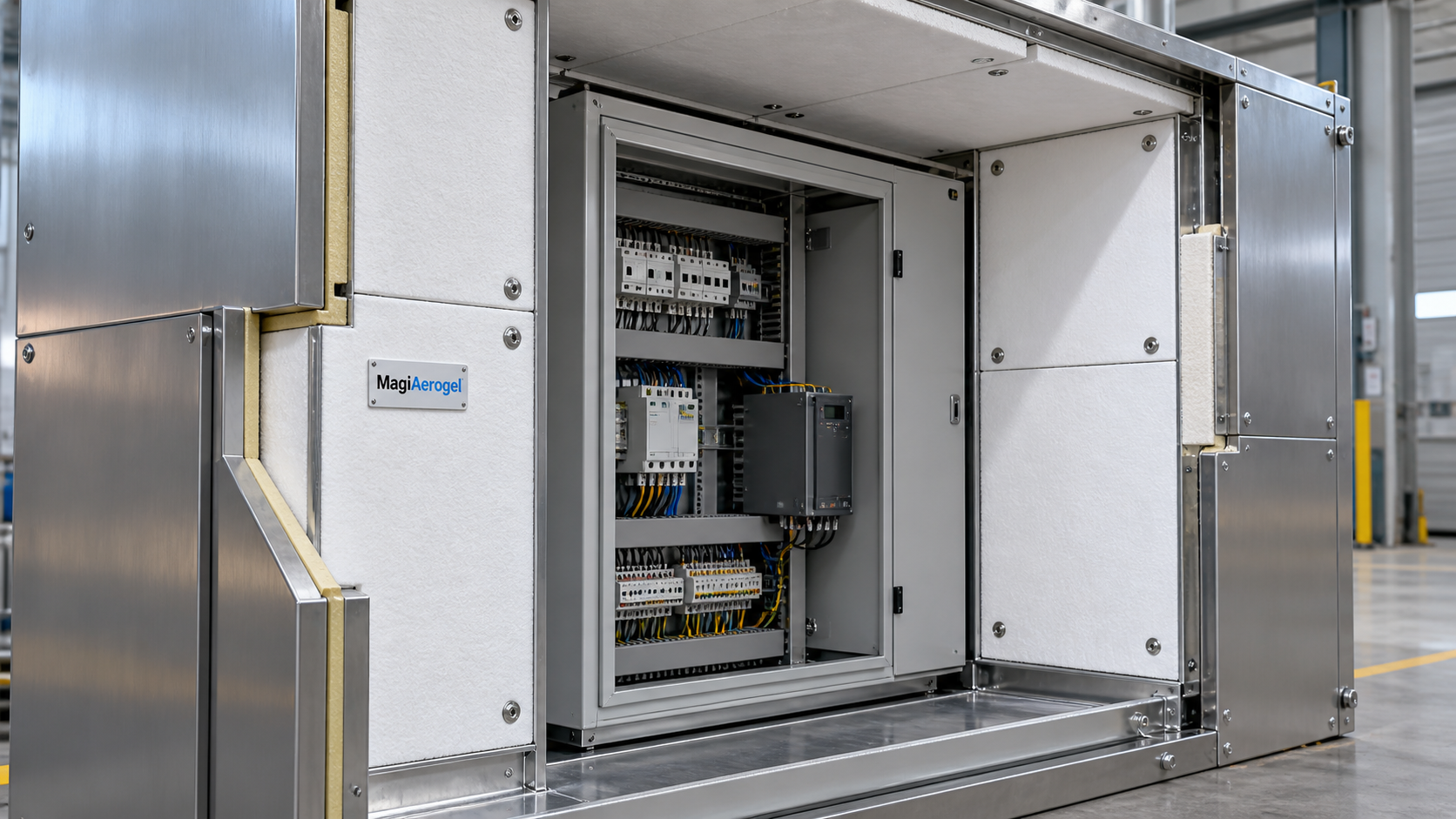
5. Define fastening and compression rules
Fasteners and clamps can create local compression or thermal bridges. Confirm the permitted fixing method, hole size, washer arrangement, adhesive compatibility, and whether a spacer or facing is required.
The installer should know which faces may be compressed and which edges must remain supported. A tight cover is not evidence of a correct fit if it bends the sheet or leaves an unplanned gap at the perimeter.
6. Protect seams and service access
Map every seam and decide how it will be closed. Depending on the enclosure design, the detail may use a compatible tape, facing overlap, gasket, sealant, or a separate cover strip. Document the choice in the drawing rather than leaving it to site improvisation.
Keep removable panels removable. A thermal barrier that blocks a fuse access point or inspection door can create more maintenance risk than it solves.
For wider energy-efficiency context, buyers can also review the U.S. Department of Energy energy resources. Use external guidance as context and the supplier datasheet as the basis for the selected material specification.
7. Set a measurable approval record
Before delivery, connect the purchase order to a short inspection record. Include panel ID, thickness, length and width, visible damage, facing condition, packaging, batch reference, and the documents supplied with the shipment.
Record the installed gap at representative edges. If the project uses a tolerance of 2 mm or 3 mm, state that limit explicitly and verify it on the first assembled enclosure before releasing the remaining panels.
A practical review sequence
- Confirm the thermal target, temperature, clearance, and design thickness.
- Approve a representative sheet sample and cut-edge condition.
- Review panel drawings for openings, seams, and service zones.
- Confirm fasteners, compression limits, and compatible seam materials.
- Inspect delivery and record fit, gaps, damage, and unused offcuts.
The related guide on aerogel insulation sheet qualification can support the sample and drawing review. Keep product line, thickness basis, and enclosure assumptions consistent between the two documents.
Request a sheet integration review
Send the enclosure drawing, target temperature, required thickness, cut-out list, and estimated quantity for a product-fit review.
FAQs
What thickness should buyers confirm for aerogel insulation sheets?
Confirm the design thickness and permitted tolerance for each enclosure face. A 10 mm sheet can be a useful quoting reference, but the final thickness depends on the heat-loss target, temperature, clearance, and assembly layers.
How much cutting allowance should be planned for sheet panels?
Start with the measured net area plus a documented 5% to 15% cutting allowance. Complex corners, openings, and service cut-outs may require more after drawings or a site measurement are reviewed.
What flatness tolerance matters during enclosure integration?
Ask for the supplier’s current flatness and thickness tolerances and record the acceptable range on the approval drawing. A small edge lift can create a thermal gap or interfere with a cover when the clearance is only a few millimetres.
Which documents should be requested before ordering aerogel sheets?
Request the current datasheet, thickness and density basis, temperature range, facing details, cut-size tolerance, packaging requirements, sample record, and a drawing review for any panel with more than 2 openings.
<script type=”application/ld+json”> { “@context”: “https://schema.org”, “@type”: “FAQPage”, “mainEntity”: [ { “@type”: “Question”, “name”: “What thickness should buyers confirm for aerogel insulation sheets?”, “acceptedAnswer”: {“@type”: “Answer”, “text”: “Confirm the design thickness and permitted tolerance for each enclosure face. A 10 mm sheet can be a useful quoting reference, but the final thickness depends on the heat-loss target, temperature, clearance, and assembly layers.”} }, { “@type”: “Question”, “name”: “How much cutting allowance should be planned for sheet panels?”, “acceptedAnswer”: {“@type”: “Answer”, “text”: “Start with the measured net area plus a documented 5% to 15% cutting allowance. Complex corners, openings, and service cut-outs may require more after drawings or a site measurement are reviewed.”} }, { “@type”: “Question”, “name”: “What flatness tolerance matters during enclosure integration?”, “acceptedAnswer”: {“@type”: “Answer”, “text”: “Ask for the supplier’s current flatness and thickness tolerances and record the acceptable range on the approval drawing. A small edge lift can create a thermal gap or interfere with a cover when the clearance is only a few millimetres.”} }, { “@type”: “Question”, “name”: “Which documents should be requested before ordering aerogel sheets?”, “acceptedAnswer”: {“@type”: “Answer”, “text”: “Request the current datasheet, thickness and density basis, temperature range, facing details, cut-size tolerance, packaging requirements, sample record, and a drawing review for any panel with more than 2 openings.”} } ] } </script>