
Aerogel insulation sheets should be qualified as an enclosure system, not as a thickness number alone. Silica aerogel sheet buyers need to confirm panel dimensions, cut-edge behavior, fastening clearance, and service access before a thin insulation layer can reduce project risk.
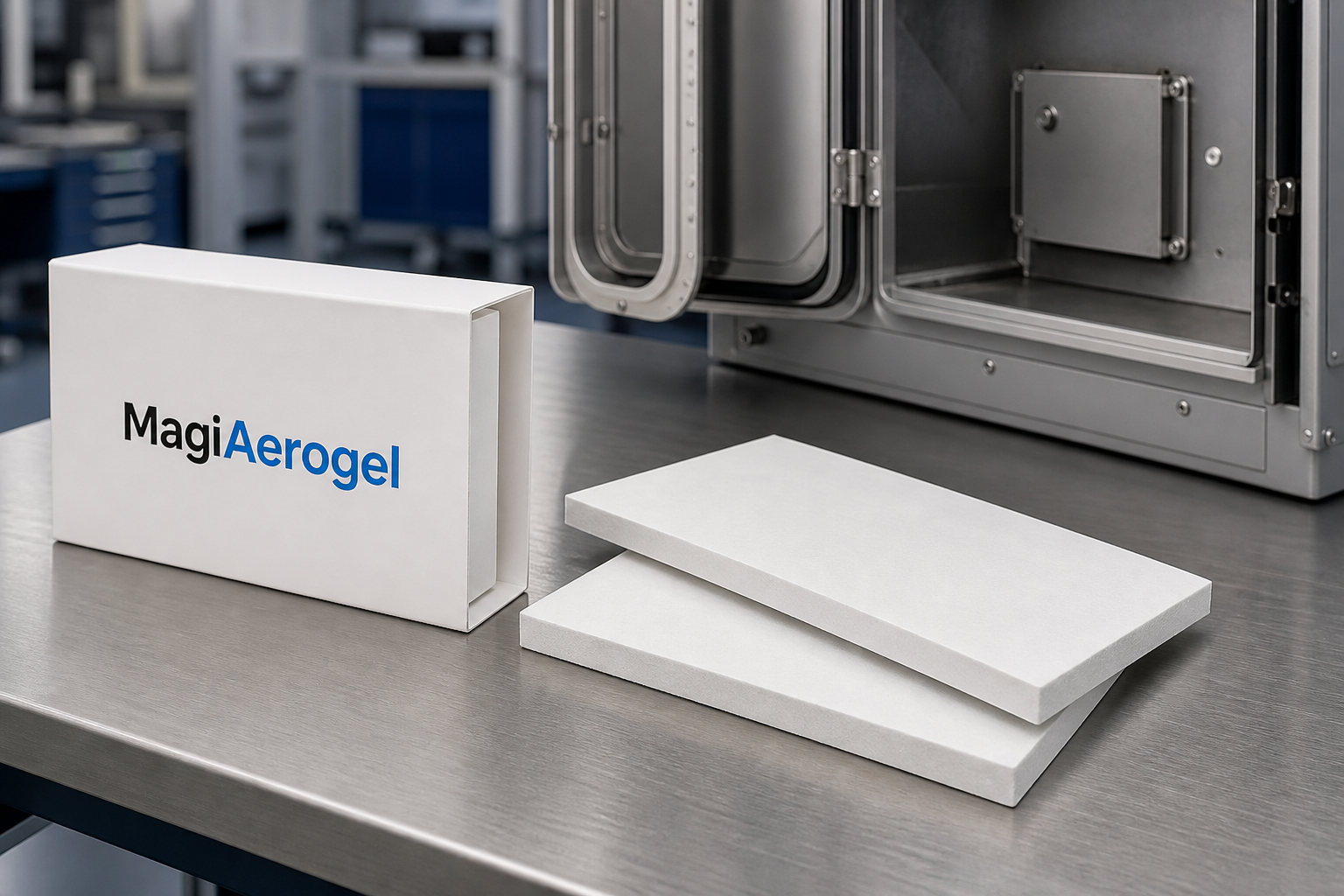
What should buyers check before approving aerogel insulation sheets?
The first decision is whether the sheet fits the enclosure geometry without creating installation or service conflicts. Begin with the target panel size, thickness, joints, cut-outs, fasteners, and removable covers rather than comparing thermal claims in isolation.
Use the MagiAerogel silica aerogel sheet insulation panel as a reference when documenting the available space and the intended fixing method. Record the following before sample approval:
- Clearances at doors, hinges, access panels, and cable entries.
- The permitted sheet thickness and tolerance at each interface.
- Cutting, edge sealing, facing, and dust-control requirements.
- The expected temperature, vibration, moisture, and cleaning exposure.
How do silica aerogel sheets compare with a layered enclosure build?
A panel format can simplify thin-build integration, but only when the joints and support details are controlled. The comparison below keeps the qualification conversation focused on project decisions instead of generic material claims.
| Buyer check | Silica aerogel sheet approach | Layered insulation approach |
|---|---|---|
| Limited clearance | Can support a compact build when the specified thickness fits | May require more build-up and trim space |
| Cut-outs and service panels | Needs planned edge treatment and repeatable templates | May need multiple layer transitions |
| Inspection | Compare thickness, faces, and joints before closing the enclosure | Inspect each layer and interface separately |
| Replacement work | Keep dimensions and lot records for matched replacement | Rebuild the full layer stack if one layer changes |
For an industrial-use comparison, review the MagiAerogel aerogel insulation panel against the actual enclosure drawing and operating conditions.
Which enclosure details create the most risk?
Corners, penetrations, and removable covers usually decide whether aerogel panels perform as intended. A flat sample may look acceptable while a production enclosure still has compression, gaps, or inaccessible fasteners.
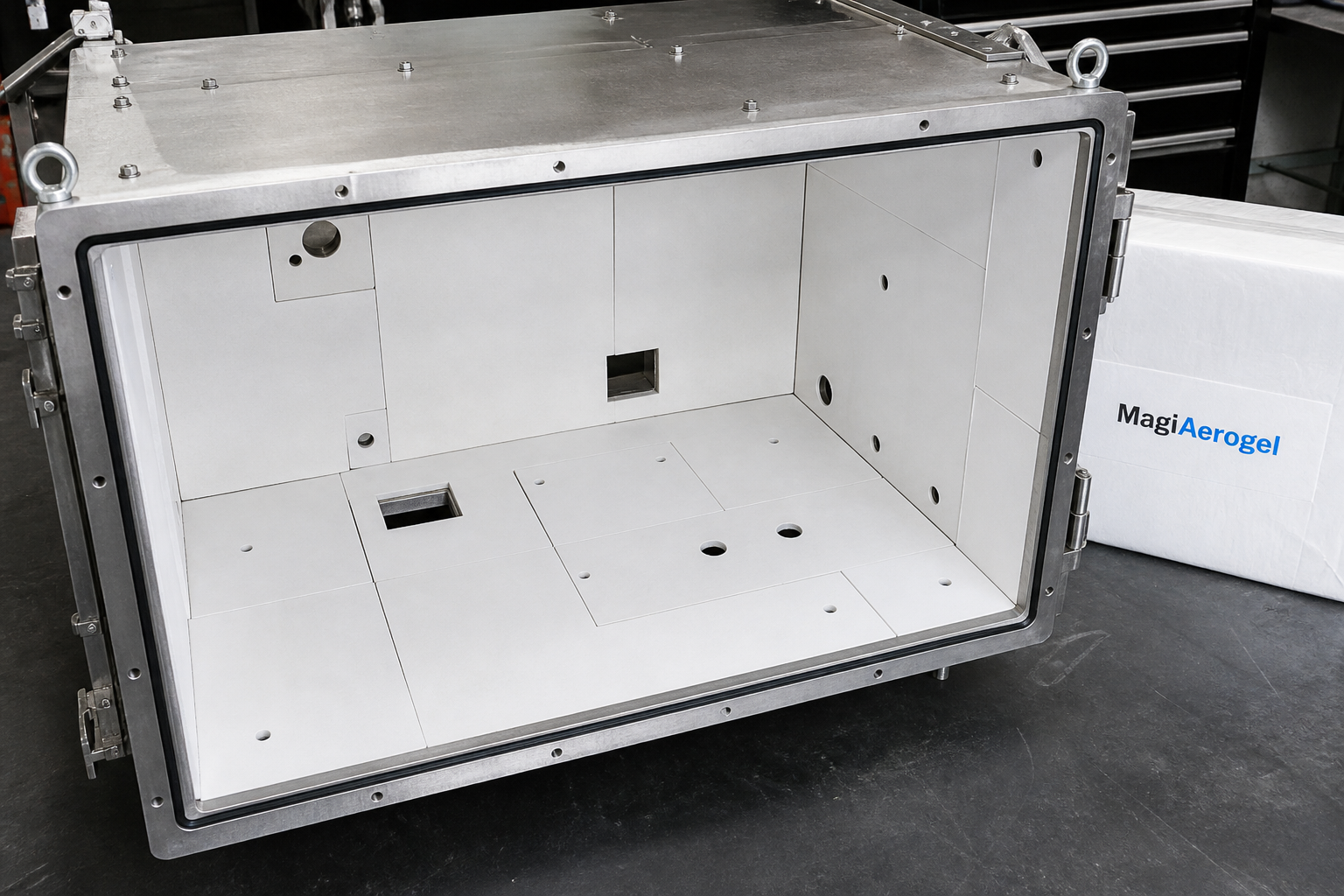
Create a short installation review that names the joint treatment, minimum bend or trim radius where applicable, compression limits, and inspection points. If a service cover needs to be removed often, verify that the panel can be protected and refitted without damaging its edges.
What should a buyer request from the supplier?
A usable qualification package combines product data with dimensional and lot-level evidence. Ask for the current data sheet, nominal dimensions, tolerance, facing description, packaging method, lot identification, and handling instructions.
The MagiAerogel aerogel panel series provides the active landing page for this product line. It should support, not replace, project-specific testing and approval records.
How can a buyer prevent enclosure rework?
A small pre-installation mock-up is cheaper than correcting hidden fit issues after the enclosure is closed. Use 2 to 3 representative details, measure at least 5 thickness points per sheet, and photograph every nonstandard cut-out before signing off the installation method.
For a related decision framework, see the aerogel insulation sheets enclosure-risk review. The article adds context, while the final release must still follow the selected product data and site requirements.
Compare sheet options for your enclosure
Review the panel format and dimensional fit before selecting a silica aerogel insulation sheet.
Buyer takeaway
The best aerogel insulation sheet decision connects thermal requirements with enclosure fit and repeatable installation. Confirm dimensions, interfaces, lot records, and the service plan before release. For general energy-efficiency context, consult the U.S. Department of Energy alongside the project specification.
B2B FAQs
How many aerogel insulation sheet samples should a buyer compare?
Start with at least 3 sheets from one production lot and inspect thickness, edge condition, facing, and handling behavior. For a project qualification, test 2 to 3 representative enclosure details rather than approving from one flat coupon.
What thickness tolerance is practical for an aerogel panel review?
Set the acceptance band from the approved product data sheet and measure at least 5 locations per sheet. Record the minimum clearance at joints, doors, fasteners, and service covers before release.
Can aerogel insulation sheets replace every conventional enclosure insulation layer?
No. They are best evaluated where thin build, controlled panel fit, and thermal performance are the primary constraints. Verify temperature, mechanical loading, fire requirements, moisture exposure, and fastening details for the exact enclosure.
Which records should follow an aerogel sheet delivery?
Keep the product specification, lot number, sheet dimensions, inspection results, packaging condition, and installation sketch. Those 6 records make later replacement or root-cause review substantially faster.