
When technical buyers source aerogel insulation sheets, the main project risk is often integration rather than the headline material specification. A silica aerogel sheet must arrive in a repeatable format, fit the available enclosure space, and remain traceable through cutting, fastening, inspection, and replacement planning.

What should buyers check in aerogel insulation sheets?
Start with the physical envelope: thickness, width, length, cut tolerance, facing or wrapping, edge condition, and the number of panels required per assembly. A buyer comparing an aerogel sheet with conventional insulation should also record the usable cavity depth, contact surfaces, service temperature, and any compression limits that affect the installed design.
Review the published MagiAerogel silica aerogel sheet panel against the project drawing and the supplier’s technical data. Keep the approved sample, lot number, dimensions, and test conditions together so later replacement panels can be checked against the same reference.
For a second verified format reference, compare the MagiAerogel industrial aerogel insulation panel with the same drawing, clearance, facing, and tolerance requirements. This comparison helps buyers separate product-format fit from generic thermal-performance claims.
How do aerogel insulation panels fit an enclosure?
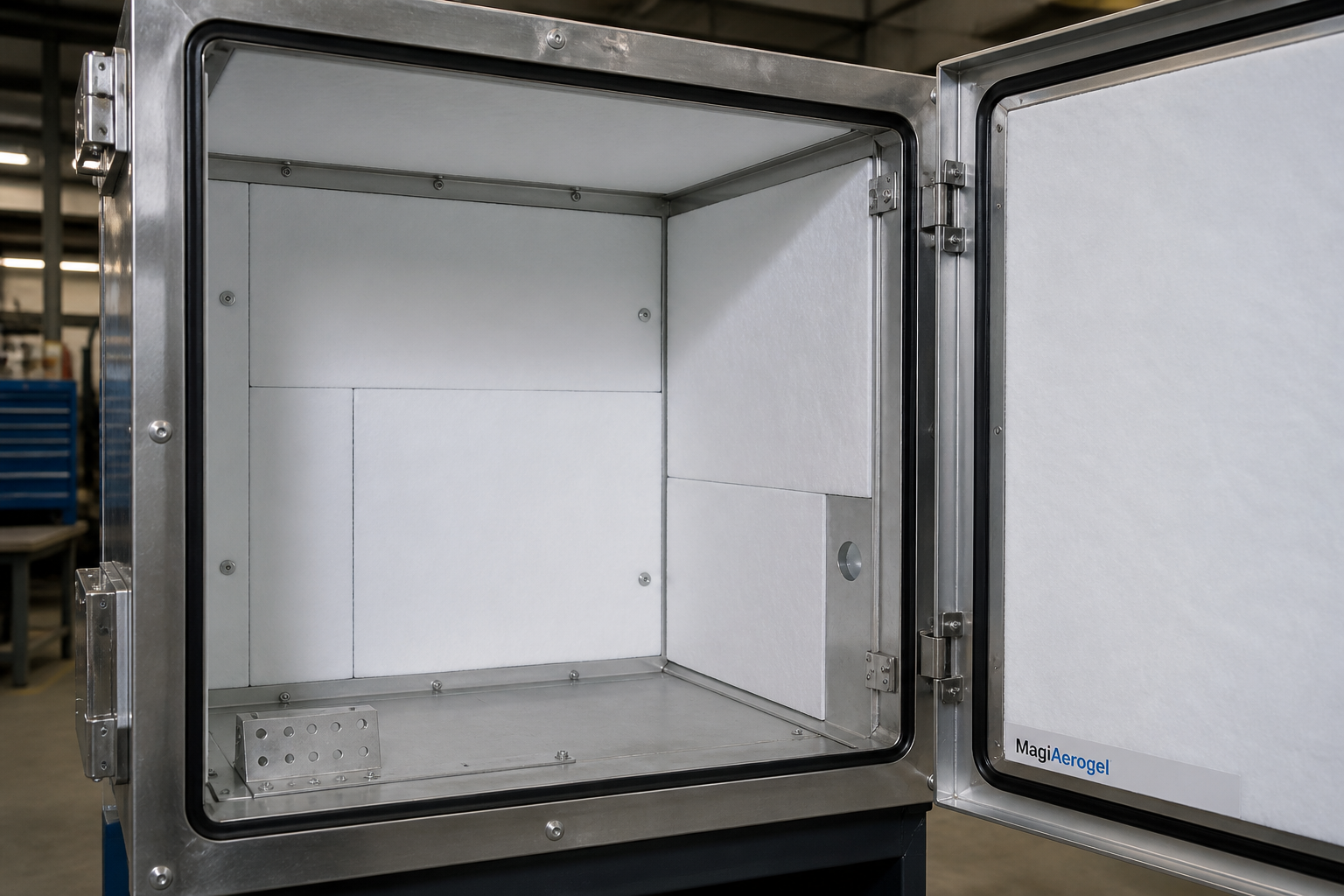
Panel-format silica aerogel is most useful when the enclosure geometry is defined before ordering. Map each face, opening, corner, fastener, and service zone. Then decide whether the panels will be supplied as standard rectangles or cut to a drawing. A practical review should cover:
- Thickness: compare the 5 to 20 mm range with the available cavity and required thermal target.
- Clearance: reserve a documented 3 to 10 mm allowance where the enclosure and fastening system require it.
- Seams: place joints away from critical heat bridges and record the approved overlap or butt-joint method.
- Traceability: label each panel set with drawing revision, lot, quantity, and inspection result.
- Replacement: keep a 10 to 50 sheet pilot quantity or spare plan for fit checks and field replacement.
Which aerogel sheet details reduce installation delays?
Ask for packaging that protects edges and keeps the panels dry and clean during transit. Confirm whether dimensions are measured before or after any facing step, whether the supplier can provide a cutting layout, and whether the minimum order quantity matches the pilot build. These details often prevent a technically acceptable material from becoming a schedule problem.
Use the MagiAerogel aerogel panel series to align future sheet selections with the same product family. For context on reducing sourcing uncertainty, see the related aerogel insulation sheets project-risk checks.
A buyer-ready acceptance plan
Before release, approve one representative panel set and document dimensions, tolerance, surface condition, packing, and installation method. Test the actual enclosure interface rather than relying only on a brochure value. For broader energy-efficiency context, consult the U.S. Department of Energy energy-efficiency resources, then set project limits from your own operating temperatures and qualification data.
B2B FAQs
What thickness range should buyers compare for aerogel insulation sheets?
Start with 5 to 20 mm, then confirm the required build-up against cavity depth, surface temperature, and target thermal resistance.
What clearance should a sheet-panel design reserve around fasteners and seams?
Use a documented 3 to 10 mm installation allowance where the design permits it, then validate the exact clearance with the fabricator.
What qualification lot is practical for a new aerogel sheet project?
A 10 to 50 sheet pilot lot is a practical starting range for cutting, fit, handling, and enclosure-integration checks.
What dimensional tolerance should buyers request for cut aerogel panels?
Request a written tolerance, commonly around plus or minus 1 to 3 mm, and confirm whether it applies before or after facing or wrapping.