
Aerogel sheet projects usually miss their first-fit target when buyers approve the thermal claim but leave panel tolerance, edge sealing, fastener offset, and door-clearance checks for the fabricator to resolve later. The fastest way to reduce aerogel sheet fit risk is to define silica aerogel sheet as a dimensional part, not just an insulation material, with measured thickness limits, cut allowances, and enclosure checkpoints before production starts.
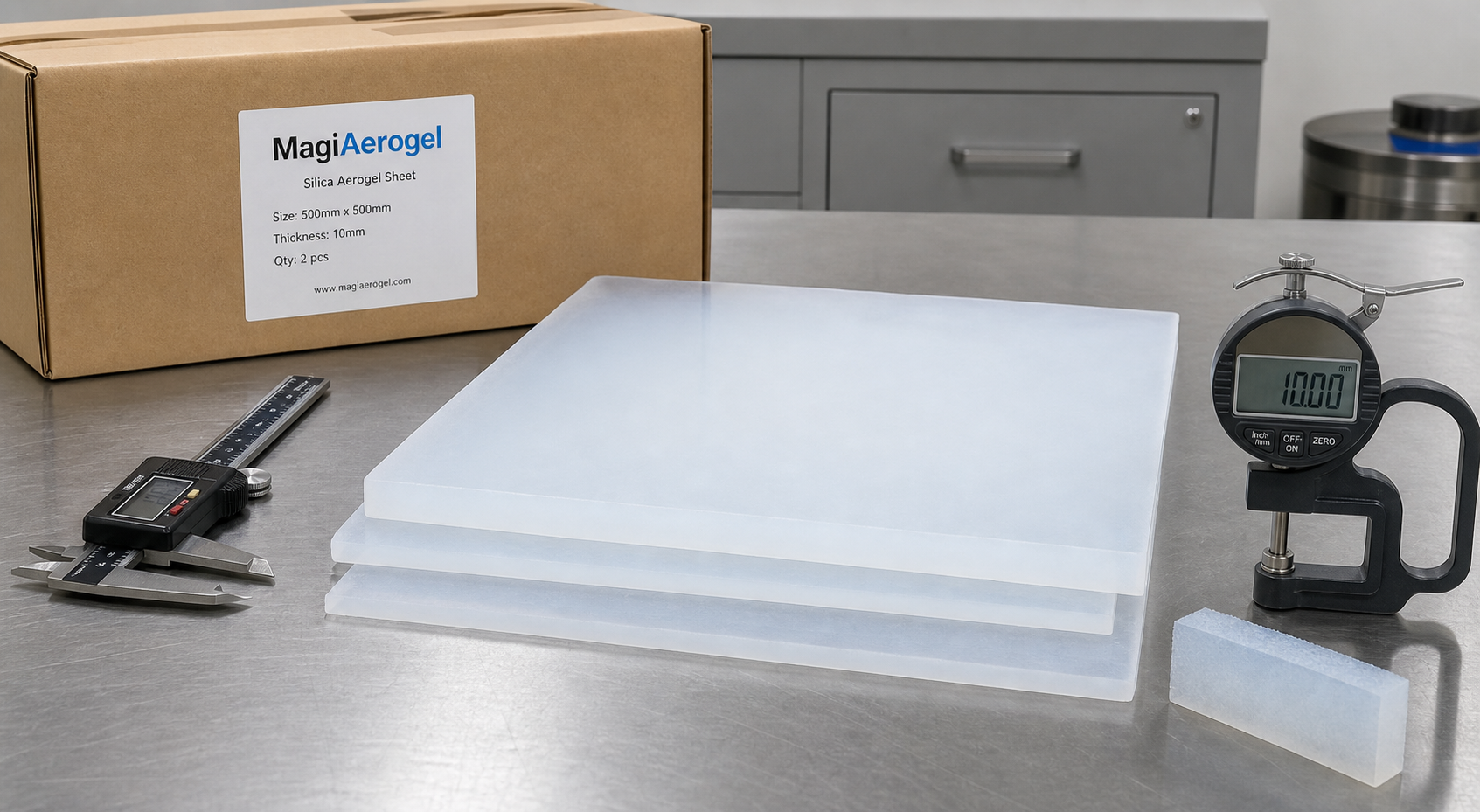
Short answer for technical buyers
Aerogel sheet performs best when the buying package locks four controls before release:
- Nominal panel thickness and allowed thickness variation.
- Cut tolerances around holes, hinges, and removable covers.
- Edge treatment, fastening pattern, and compression limits.
- A first-article inspection plan tied to real enclosure dimensions.
The Aerogel Sheet Silica Insulation Panel is most reliable when the panel is reviewed as a fit-critical insulation component rather than a generic substitute board.
Where enclosure fit risk usually starts
| Fit-risk trigger | What the buyer leaves open | What happens later | | — | — | — | | Panel thickness is quoted but not tolerance-controlled | Compression range is undefined near latches or screws | Doors bind or pressure points appear after assembly | | Hole and cutout geometry is approved from rough sketches | Hardware offsets are not checked on the real enclosure | Installers reopen the panel to trim on site | | Edge treatment is treated as secondary | Seal, tape, or wrap buildup is ignored | Final stack-up exceeds the available gap | | First article is skipped | No measured comparison to the housing exists | Scrap rises during the first batch |
Silica aerogel sheet earns its value when buyers control the full panel stack-up early enough to stop rework before the enclosure reaches final assembly.
The controls that reduce rework fastest
| Control | What to define | Why it matters | | — | — | — | | Thickness window | Nominal sheet build and maximum local compression | Protects fit around hinges, doors, and cover plates | | Trim map | Standard cut allowance for holes, corners, and radii | Lowers manual recutting during install | | Edge rule | Tape, wrap, or sealing detail by edge type | Keeps the assembled stack-up predictable | | Fastener spacing | Hole offset and clamp-pressure pattern | Prevents cracking, crushing, and panel creep |
The earlier article on how buyers cut enclosure rework with aerogel sheet is a useful companion because it shows how panel-fit errors usually turn into repeat labor after the housing reaches the line.
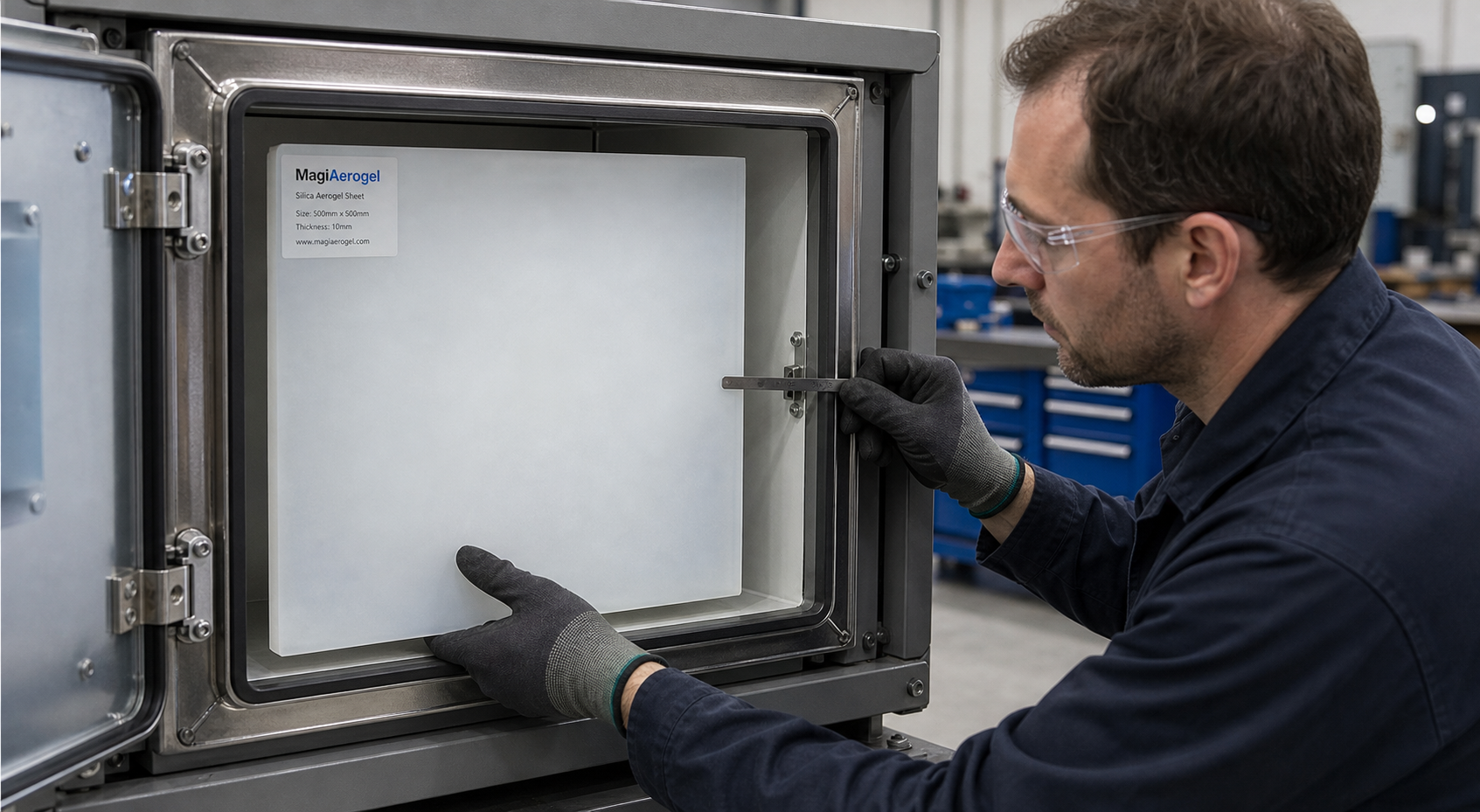
When thin aerogel insulation sheet is worth the premium
Thin aerogel insulation sheet is usually the right choice when buyers need:
- thermal performance inside a narrow wall or cover depth
- cleaner fit around service panels, latches, and cable penetrations
- lower enclosure redesign risk during late-stage thermal upgrades
- less labor trimming than a thicker rigid board alternative
It is a weaker fit when the enclosure has abundant depth and the design can absorb a thicker conventional panel without changing hardware geometry.
First-article checklist before volume release
- Measure actual enclosure depth at flats, bends, and hardware zones.
- Confirm the allowed silica aerogel sheet thickness variation at the tightest point.
- Trial one panel with all holes, cutouts, and edge details finished.
- Check latch force, door closure, and removable-cover access after fit-up.
- Record scrap rate and trim time before the bulk release is approved.
The U.S. Department of Energy remains a useful outside reference because insulation upgrades should still be judged on measurable energy performance, service access, and lifecycle value instead of material claims alone.
Final decision rule
Aerogel sheet cuts fit risk when buyers purchase a repeatable panel geometry, not only a thermal material. If the drawing package locks thickness, trim allowance, edge buildup, and enclosure clearances before fabrication, silica aerogel sheet usually delivers faster first-pass fit and less panel rework.
FAQs
What panel thickness tolerance should buyers lock first?
A practical first control is to hold the aerogel sheet build within about 3 mm to 10 mm nominal thickness and keep finished-panel variation close to +/-0.5 mm to +/-1.0 mm. Wider drift usually shows up first at door clearances, latch pressure, and edge compression zones.
How much enclosure clearance should teams leave around a fitted sheet?
Many buyers start with a working clearance band of roughly 2 mm to 5 mm around corners, fastener heads, and removable covers, then confirm the exact gap in the production mock-up. Tighter layouts can work, but only if the panel and hardware stack-up are already measured.
When is silica aerogel sheet better than a thicker legacy board?
It is usually the stronger option when the insulation target must fit inside about 5 mm to 15 mm of limited space, or when rework on enclosure doors and covers is expensive. If the assembly has generous depth, buyers should still compare thicker conventional options on total installed cost.
How large should a first article panel trial be?
A useful trial often covers at least 2 to 4 panel sizes with one corner cutout, one latch zone, and one removable cover included. That range is usually enough to expose trim loss, edge damage, and fastener interference before volume release.